Lessons from Goat Kidding: Triumphs and Tragedies

Glimmer

I am going to be honest with you, I tend to run a little on the pessimistic side. With our first kidding season on the farm coming up I just figured something would go wrong. I did not think it would go this wrong.

Back in late October and early November, we bred three of our goats. Two of our Nigerian Dwarfs and our one Alpine. The Alpine has kidded before, but it was a first for both the Nigerians. They were however almost two years old, so being too young was not a factor in this incident. I watched every video, talked to my vet friend, and did all the research. I felt like I was as prepared as you can be for your first kidding.

The First One

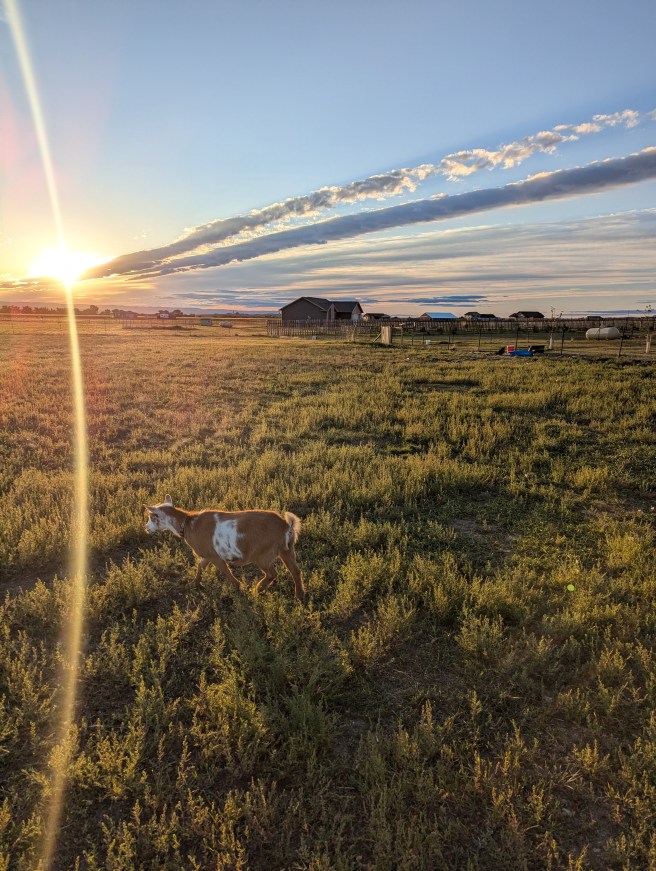
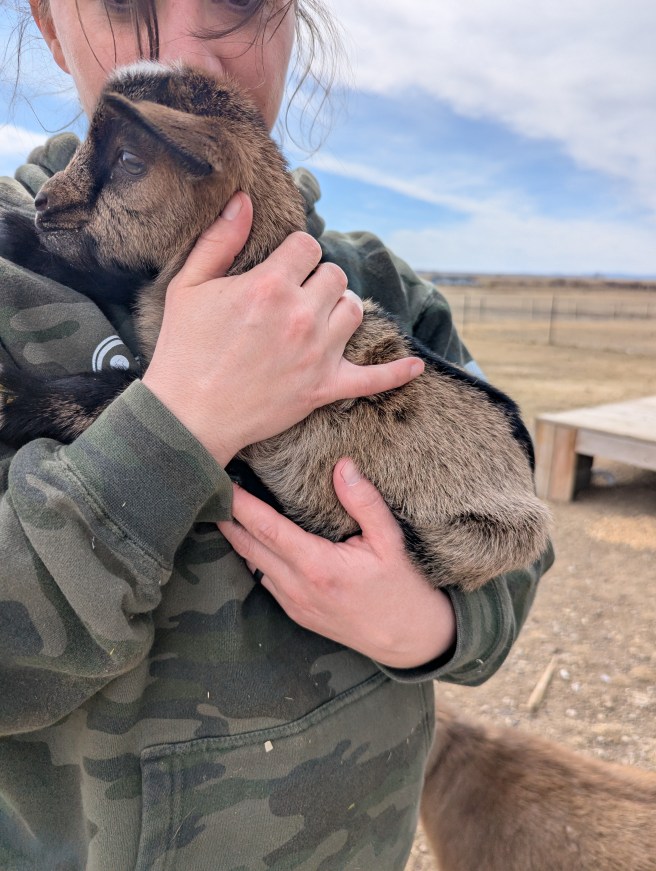
Our first goat to go into labor was Val. I had been watching her for days and the morning of her delivery she was very typical of a goat in labor. She was super loud, followed me everywhere, and you could just tell she was uncomfortable. It was a terribly windy day so I went ahead and put her in the kidding stall early and I sat with her all day. It was a very long day. Around 8pm she finally went into active labor. Again, typical of all the things I had read. She was up and down, pawing the ground, and started a few small pushes. Everything I read says once they are pushing it should not take more than 30 minutes before you go in and help. She took an hour. However, it was not super consistent in the beginning and she didn’t look in distress so I let her go. Once she started pushing hard, the baby was out in no time. For her delivery, she pushed and a water sack presented and then popped. She pushed some more and another water sack presented but this one had the baby in it. As soon as she had kidded another sack presented which ended up being the placenta. All very textbook and easy. I did feel her stomach after since she only had one baby and we were expecting more (she was huge), I thought I felt something but she passed the placenta, and all the research I had done said that was the end of labor, there were no more kids. In this case, they were right. She was done and her baby was HUGE! She safely delivered one good-sized doeling and has raised her for the last few weeks very successfully. She is a great mom!
Astrid

Tragedy, The Second Birth

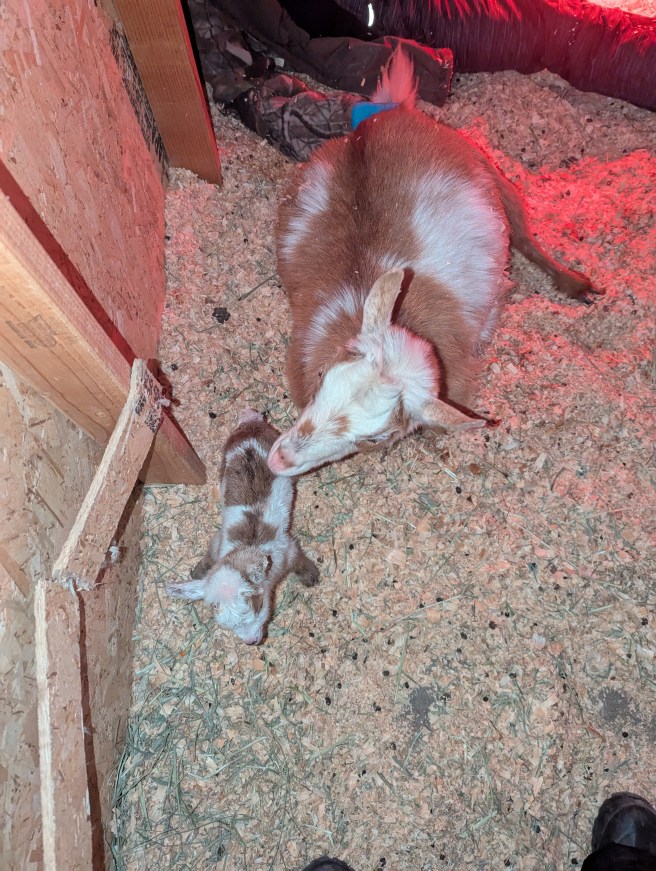
Two weeks after Val delivered, our second Nigerian (Glimmer) went into labor. This labor however was anything but typical. To start with she delivered on a Sunday, but the Thursday before I could have sworn she was in labor. She looked so uncomfortable all day, pawed the ground, and was restless and a little loud. I put her in the kidding stall but she never really made any progress. She never pushed, she never had any discharge, and the next morning she went about her business as usual. She was fine all day Saturday as well. She ate, drank, hung out with the other goats, and had no labor signs whatsoever. Sunday she went into labor for real. When it came time for active labor this is when things got a little weird. She pushed and one water sack presented and popped. Then she pushed and another water sack presented and popped. Finally, a third water sack presented and a baby was delivered. She was TINY. Like Val, shortly after the placenta came. However, it didn’t look like Val’s. It was small and it never fully delivered. Glimmer however seemed fine. She got up, nursed her baby, drank her molasses water, and ate some food. It was late at night and everything said the placenta could take up to 18 hours to deliver so I went to bed and checked on her in the morning. The placenta was still hanging and she looked a little down. She was laying down and not really wanting to get up, she ate but not much, and she wasn’t paying a lot of attention to the baby. I could still get her up and the placenta was fully out but was still attached by a tiny bit. She was doing ok, but over the next few hours I noticed her straining and pushing. So, I reached out to my friend, a vet, and she and her husband came over.

I will backtrack and say I sent her a video of the goat and she thought either retained placenta or more babies.

When she got to our house and examined Glimmer she found that she did indeed have more babies. Two that had passed already were stuck inside. My friend did everything she could to get the babies out but Glimmer was apparently narrow in the pelvic canal and the baby in the canal was breech. She couldn’t free her and on top of that she found a uterine tear. We decided at this point that she was suffering, there was no recovery, and she was put down.
Glimmer and Baby

Dealing with Death

I was ready for complications but this one shook me. I thought the worst I would have to deal with was maybe having to reposition a baby. Now, I feel so much guilt and I wonder what else I could have done. My vet friend said there was nothing I could have done to save her. The breech baby was stuck and even she couldn’t free it. I still wonder if I had done something Thursday if things would have been different. However, there were really no signs that she was in active labor or distress. If she was I don’t know how we got one live baby in the end. Or how we got one baby and a placenta past the other two. So, in the end, we lost our doe and gained her doeling. Her little one was named Ember, as in her mom’s last little ember, and she is the cutest thing you’ve ever seen. She is taking the bottle and doing just fine. I am still struggling with Glimmer’s death and how it happened. Everything I have ever read says if you have livestock you will have deadstock, but even so, it’s hard. It feels like I failed. I was supposed to keep her safe and I didn’t. That’s a tough pill to swallow
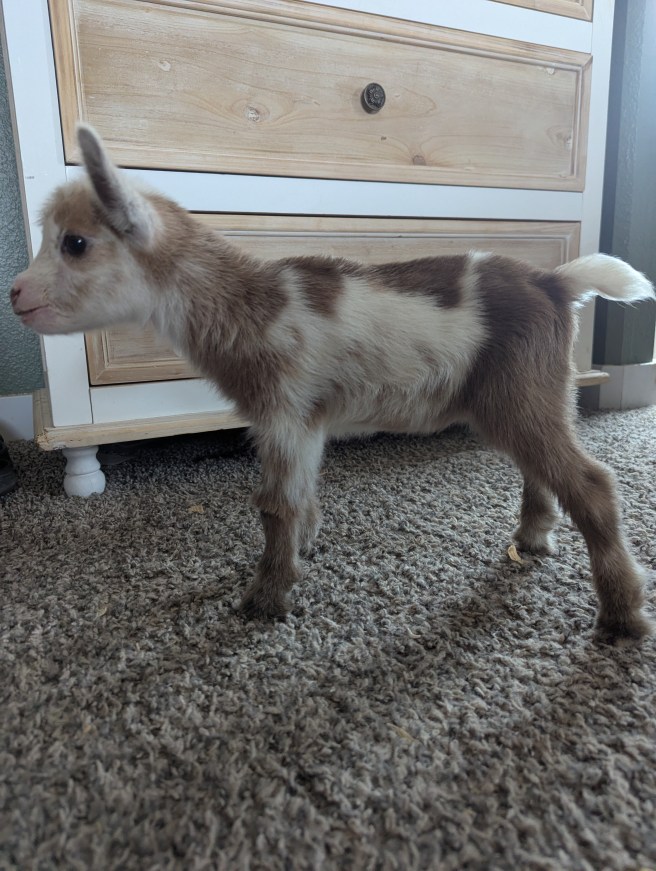
Baby Ember

The Last Delivery

I mentioned earlier we bred three goats. Our Alpine is the last to go, and for awhile I thought she wasn’t pregnant. The Nigerians developed their udders a while ago. It was obvious they were pregnant, but the Alpine still doesn’t have one. For about the last month, I have made peace with the fact that her breeding didn’t take. She is the one goat I was really looking forward to, as she was bred to a Nigerian Buck and will have a mini Alpine baby, but I thought it wasn’t meant to be this go round. A few days after Glimmer passed, I was in the pasture and noticed Lee (Alpine) had a few pregnancy signs after all. She is a skinny goat so it was hard to tell. Now, it feels a little bit like a second chance. A light after the dark. She is definitely pregnant and due in about a week. I’m nervous, but she has kidded before and should be fine. I can’t wait to see what she has and I pray that it goes smoothly. This will be the end of our kidding season and I would really like for it to end in celebration. If she gives us a doeling I will be over the moon.
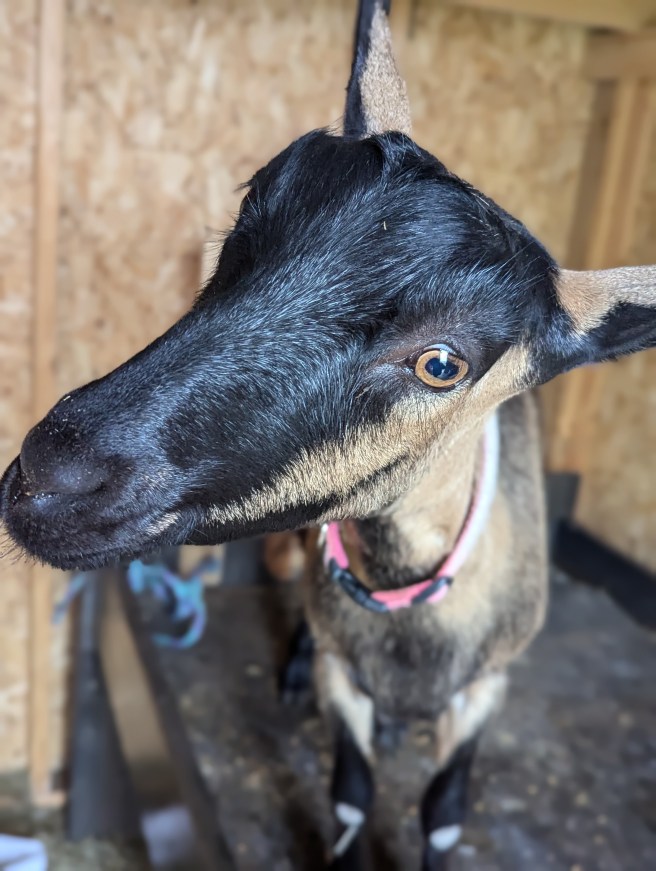
Lee

Baby Goats

Little Ember is doing great. I however am a bit sleep-deprived. She is so tiny, so I make sure to get up every night at 2am and give her a bottle. She spends most of her day in the pasture with the big goats and sleeps with our other baby (Astrid) at night in the shed. They both love to run around the pasture and do the biggest little jumps you have ever seen. If nothing else, baby goats are super entertaining. It is a joy to watch them play together. It doesn’t fix everything but having them makes it a little better.
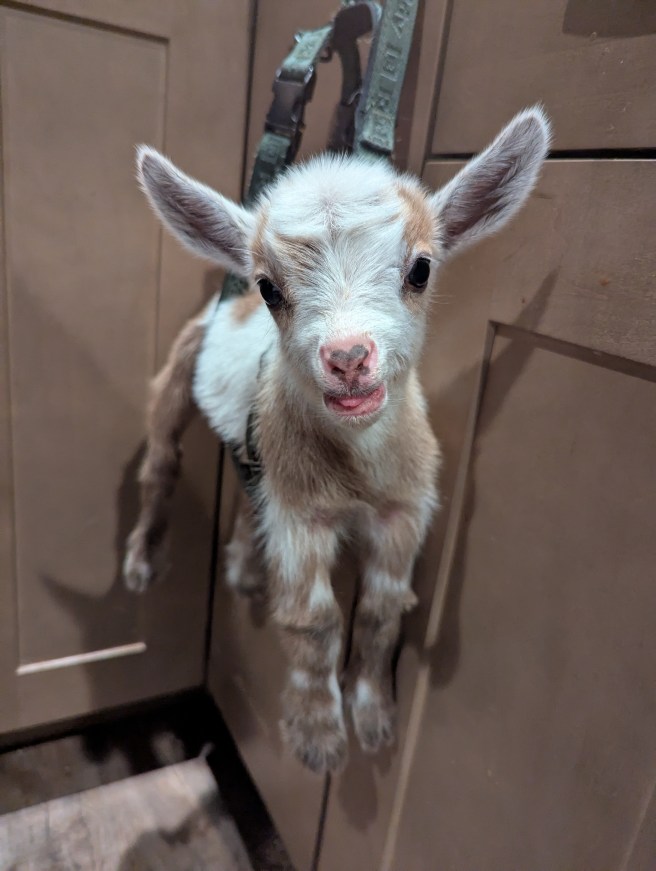
Ember

Final Thoughts

I keep replaying this in my mind and trying to learn from what went wrong. I asked online, Goat Forum, about the water sacks and everyone seemed to think it was normal, but i thought it was strange. As it turned out, it was multiple kids. I trusted a little too much in research and online help than what my gut told me. I still don’t think though even if I had gone in, the results would have been any different. If a vet can’t reposition the baby I doubt I could have. I also doubted myself when I thought I felt more babies since the placenta was passed. I think the take away is that I know my goats. I am with them every day and I should have trusted myself a little bit more. The end result would have still probably been the same, but I would have at least felt a little better about my part. I do still think I did what I could for the most part. I got a vet involved as soon as I thought it was needed and unfortunately it wasn’t enough. So, if you have goats and plan to breed them just be prepared. It can be one of the most amazing things you’ve ever done, watching a brand new baby be born is awesome, but it can also go wrong. As a livestock owner I try and do everything I can to take care of the animals I own, but things still go wrong. I will learn from this and use this knowledge from here on out. Let’s pray none of us ever face this again.
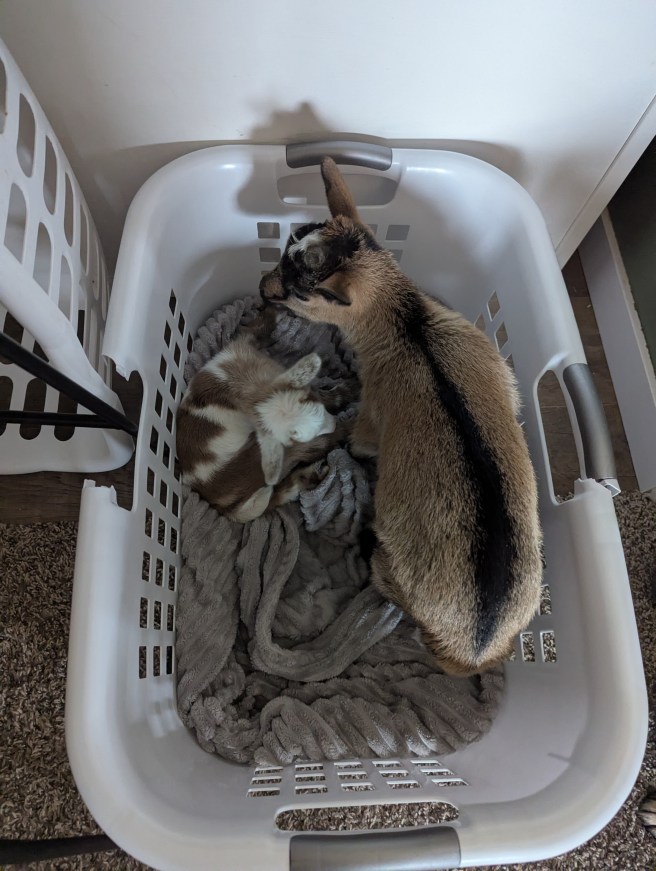
Two weeks apart. Look at the size difference

If you have any advice to share or kidding stories feel free to leave them in the comments. Maybe we can all learn and grow in knowledge together.

Happy New Year

Happy New Year! Our family had quite an interesting holiday break, we were all sick. There are four of us in this family and someone was sick the entire time we were off for holiday break. Between stomach bugs and chest colds, I am completely wiped out.

On a happier note, everyone on the farm is doing fine. We have had some cold weather and recently had a bit of a snow storm and so far everyone is doing fine. I was a bit surprised with how our muscovy ducks handled the crazy weather. I had a shelter all ready to go for them and they proceeded to completely ignore it and simply sit out in the snowstorm like it was a sunny day. Apparently, snow and wind have no effect on muscovy ducks.

Goat Plans

About a week ago I made some changes to how we are keeping our goats. I have five does and two bucks, and until the switch the boys lived in the “buck pen” and the girls all stayed in the large pasture with a shelter. Three of my does had a baby in April and were the goats we milked all through the spring to fall. One of them is our Alpine and because she is a larger breed goat, she will not go into heat all year round like the Nigerian Dwarf girls will. So, I only have the fall to get her bred or she won’t deliver this year. So, our breeding plans for the year were to breed our two Nigerian Dwarf girls who have never had a kid, and our Alpine.

I am fairly certain the two Nigerian Dwarf girls are bred. I have not seen them come back into heat and they are getting quite fluffy. However, I am not certain. I bred our Alpine twice the last time she came into heat, I haven’t seen her come back into heat, however, I have no idea if she is pregnant. She doesn’t look to be getting any bigger but Alpines typically have one baby, so I don’t know if you could even tell by looking at her or not.

So, to make fully sure they are all bred I went ahead and put the bucks in the pen with the ladies I want to kid. I took the two does I do not want bred and put them in the buck pen. I am hoping that I can watch over the next month and see if anyone comes back into heat. If no one does, then in theory all the does will be confirmed pregnant.

If they does took on the first breeding we should have kids at the end of March. This will be our first kidding on the farm, and for two of the does their first kidding as well. I am a little nervous about our first deliveries, but I have faith we will get it done.

Now we just have to make it through the winter!

2024 Fall Breeding Plans

It’s that time of year. Breeding season is upon us. In our goat herd, we have four Nigerian Dwarf does and one Alpine doe. Two of the Nigerian Dwarfs and the Alpine are currently in milk and not on the docket for breeding this fall. That leaves my two other Nigerian Dwarf girls to be bred for the first time.

Since we live in a colder climate I decided to wait until October to breed the girls. February can be quite brutal here and I did not want to try and keep kids alive in the extreme cold. Goat pregnancies are around 150 days, which should put us delivering in March if they conceive in October.

We have actually, already attempted breeding with our fall girls as of this post. In fact, yesterday we were able to breed the goat who I thought would never come into heat. She showed tons of signs but wasn’t interested. She still ran around a bit yesterday but I do believe our buck was able to get his job done. Both of these does have never been bred before, and our buck is about six months old and a new breeder as well, so I will not be shocked if this first time doesn’t take.

Now, we simply watch and wait. If they go back into heat we will know they weren’t successfully bred and will try again. In the meantime, I am drying off the other two Nigerian Dwarfs and will be keeping the Alpine in milk. As mentioned earlier we live in a very cold climate, and on the prairie, so it gets pretty miserable out here. I decided to dry off the other two does since they give less milk and I would have to keep two of them in milk to produce what the Alpine does alone. We will keep the Alpine in milk throughout the winter since she produces enough for our family and is really quick to milk. When temps are in the negative and the wind is blowing I want to be outside for as little time as possible.

Those are our fall breeding plans. I am not sure yet what we will do for the rest of the upcoming year. If the two bred now kid in March then they should be able to stay in milk until we hit winter next year. I am not sure how long our Alpine will stay in milk, I have read they can stay in milk for years sometimes. However, I think I may breed her sometime in the spring and have her kid next fall so we can milk her through the winter again. As long as that provides our family with enough milk then that might end up being our breeding schedule from here on out. That would actually give each goat a pretty good chunk of time off between kiddings.

I think our biggest challenge is going to be not keeping every baby born here on the farm. My kids get attached to everything!

Mastitis or Drama Queen? Dairy Goat Adventures

We have five dairy goats here on our farm, and my favorite is a little brown Nigerian Dwarf named Artemis. I have loved her from the moment I met her when she licked my face through the fence. She has always been the sweetest and most calm goat……until recently.

A week or so ago I noticed that she wasn’t eating her food as quickly as usual while on the milking stand. She didn’t seem uncomfortable or anything just wasn’t gobbling down her grain. A few days of this and she started not standing as well as she usually does. She kind of scooted off to this side and I would have to move her back and then she stomped her foot here and there. This clued me into the fact that something could be wrong, but at that moment I didn’t see any other signs of anything serious. She ended up acting like she had mastitis or, at least that was my best guess. The last day that I really noticed something I went out into the pasture to check on her and she didn’t want me touching her udder at all. She moaned and groaned and stomped all over the place, basically telling me to leave her alone. So, I got a hot rag and massaged her udder, gave her some Vitamin C, and made sure to gently milk her out. I was going to call the vet the next day but ended up not needing to. I will also say that a tender udder was her only symptom. Her milk was fine, no blood, no lumps, no nothing except a tender udder.

Now, let’s backtrack for one moment. When I got them from the breeder she recommended a product called Sweet Feed from the Homestead brand. That is the grain they all get while on the milking stand. Everyone loved it and gobbled it down as quickly as possible. At some point, we ran out, on the weekend of course when our local Ag store was closed, so I bought regular goat feed from Tractor Supply. No one cared for it much and was happy to have the sweet feed back when I was able to get more. However, we have had to switch back and forth a few times because Tractor Supply is much easier for me to get to and pick feed up. So, at the time of the mastitis scare, I had actually gotten the sweet feed again thinking this was the preferred food. I once again ran out of sweet feed on the weekend and grabbed the Tractor Supply feed for the time being. This time however I started to notice a change in Artemis.

Now, I will never know for sure that this is the case, but I swear that goat threw a hissy fit and basically just refused to be milked because of the food change. She acted like she was in so much pain and almost as soon as the feed changed she was fine again. She has had her preferred food for 4 days now and she’s back to waiting at the fence for her turn, she runs full speed to the barn to get on the stand and chows down while standing perfectly still to be milked. I cannot believe it. So, either this goat had the tiniest case of mastitis ever, a bruised udder somehow, or she’s the biggest drama queen I have ever met. She did end up getting her way though.

The lesson learned. Apparently, we will be using the Tractor Supply food from now on. ( In case you’re curious it’s the Nutrena Brand goat feed in the orange bag)

Dairy Goats: Alpine vs Nigerian Dwarf

Beginner Herd

We added goats to our farm about two months ago. The first additions were a small starter herd of Nigerian Dwarf goats, which included two does already in milk, two yearling does not in milk, a month-old buckling, and a month-old wether. When we first brought them home we also brought home five gallons of frozen milk so we could try our own goat milk without worrying about feeding the bottle babies. Right away we fell in love with the fresh milk. Nigerian Dwarf milk is very creamy and not really goaty. There can sometimes be a slight aftertaste, but for the most part, it has no flavor at all. Once you have fresh milk it’s really hard to go back to anything else.

We Need Another

Out of our two milking Nigerians, we get almost exactly four cups of milk every milking. Four cups of milk per milking (twice daily) adds up to a half gallon of milk each day. Originally this was plenty of milk for our family. However, when you want to start making yogurt or other things with goat milk you end up needing a little bit more. My son alone drinks almost a quart a day. Then we ran out of frozen milk and had to start feeding our babies our fresh milk. Obviously, they need the milk and we gave it to them, but when you just got your own dairy goats it’s a bit frustrating to give every ounce back to the babies. Between the two babies, they drink a half gallon a day, so everything we got was theirs.

Originally I was looking into adding another Nigerian Dwarf to help solve this problem but she would only give us a quart of milk a day on her own. I really didn’t want to add multiple goats and have to milk four or five, twice a day. When I reached out to the lady we got our goats from she ended up not having another Nigerian anyway, but her mom had an Alpine. Her mom has been raising Alpines for about 30 years and has really nice stock. She asked if we would consider one since she would give us a lot more milk, and I agreed.

Butterfat and Volume

If you look into the different goat breeds you will find that Nigerian Dwarfs give the most butterfat in their milk. This is what makes their milk creamy. Alpines are on the lower end of the butterfat content, but they are a larger goat and therefore give a lot more volume. I think most people who want larger dairy goats tend to go with Nubians or LaManchas, but I was having a hard time finding quality goats, already in milk, within a reasonable distance from me. For those reasons, I went ahead and decided to purchase the Alpine and bring her home.

It took a few days for her to settle in, but now that she’s been here for almost a month we love her. She is one of the sweetest goats we have and she is so easy to handle. She is also giving us five cups of milk per milking, which is over a half gallon of milk a day. Currently, most of her milk is going to our bottle babies. This has been the big advantage of bringing her home. She produces enough milk on her own to feed both bottle babies and have some leftover. This allows us to keep all the Nigerian milk for drinking or for making yogurt and cheese. We have plenty of milk now! Between the three goats, we get a little over a gallon of milk a day. The bottle babies are coming up on three months old and will be weaned soonish. I’ve heard you wean them between two and three months old, but some also say to wait until they are eating solid food well. Ours are eating hay but I don’t think they are eating enough yet to be fully weaned. Once they are weaned we are going to be overflowing with goat milk.

Alpine Milk

As I mentioned Alpines have a lower butterfat content than Nigerians. On top of that Alpine milk does carry a bit of the goat flavor, and I am not sure why that is. I don’t know if it’s because they are larger goats, or if it has to do with the fat content, but it is definitely a goatier-flavored milk. It is still not bad and we don’t mind it but it is something to keep in mind when picking out a dairy goat.

Our Alpine is only a year old and on her first freshening. She is currently at around 10 cups of milk a day and I assume she will only give more as time goes on and she gets older and freshens again. When you research Alpine goat production it says they can produce 1-2 gallons a day. There was an Alpine at the place we got ours from that was the biggest goat I have ever seen. She was massive and her udder was huge. I would assume she’s closer to the two gallon a day mark. If you are looking for volume, I would think an Alpine would be a good consideration.

Another benefit that I have read is you can keep an Alpine in milk longer than you can a Nigerian. I have seen many posts saying you can keep an Alpine in milk for a few years even, while Nigerians tend to dry themselves off by ten months. So, if you don’t want to breed every year an Alpine might be what you need to look for. They do take up more room being a larger goat, but they are pretty easy to handle. At least our girl is easy to handle. She is also easier to keep fenced in. Yes, she requires more space, but she doesn’t try and squeeze under the fence like the Nigerians do. I have been surprised by how small a hole the Nigerians can manage to squeeze through. We have had quite a few escapes but the Alpine has never been the culprit.

Yogurt, Cheese, and More

There are many uses for goat milk. Basically any dairy product can be made from goat milk just like cow milk, with maybe a few adaptations.

  • Our first use for goat milk is fresh drinking. My son uses it in his cereal, we put it in our tea and coffee, and we drink it from the glass. It was an easy transition for our family to switch over completely. I was worried that they wouldn’t like it, but I think having the Nigerians first really helped with the transition to only goat milk.
  • My next favorite way to use the milk is homemade yogurt. I had never made yogurt before and it was much easier than I expected. I make it and strain it so that it is closer to a Greek yogurt and it’s fantastic. My husband has even brought some to a friend and he loved it. He has asked for more and downs it as soon as he gets it. You can make homemade yogurt with store-bought milk and if it’s anything like the yogurt we made I would highly recommend trying it.
  • The third would be a simple quick cheese. I’ve seen people call it a farmer’s cheese, or a Chevre cheese. You need an acid, (vinegar or lemon juice) and milk. It’s a pretty quick and easy process. You end up with a cheese similar in consistency to a feta. You can flavor it however you want and it’s great to add to salads or even eggs for breakfast. I would like to try and make more of a mozzarella cheese, I think this would be a bigger hit with the whole family, as the kids don’t care too much for the simple cheese.
  • Lastly, I made Cajeta. It’s a Mexican caramel typically made from goat milk. It was so good, but very very sweet. It also has a cinnamon stick added to the boiling process and I don’t know if I would add that next time. My daughter did say it reminded her of Christmas and I have to agree, there was something about it that was very much reminiscent of Christmas-time flavors. If I make it again I will not cook it as long. It turned out pretty thick and while great, was a little hard to use. I think I would like a more pourable consistency to put on ice cream.

So far I have not been able to make butter or even just heavy cream. Goat milk is naturally homogenized, meaning the fat doesn’t separate the same way cow’s milk does. From what I have read it will separate if you let it sit long enough, but the flavor of the milk will also change if it sits so I haven’t tried. For goat’s milk, it is most recommended that you buy a milk separator. I would love to have one someday, but they can be pricey so we will have to wait a little while to work that into the budget. Once we add that to our gadgets I hope to make butter, ice cream, sour cream, and heavy cream. For now, most of our excess milk is being made into yogurt.

How to Handle Goat Milk

The goaty flavor is what we are all trying to avoid in our milk. While a little goaty flavor can’t be helped sometimes the way you handle fresh milk can really make a difference. First and foremost everything has to be clean. From what you are milking into, to the goat itself, it’s very important that you make sure everything is really clean. You should avoid plastic whenever you can as it can hold onto flavors and leech those into your milk. I like to use stainless steel or we have a big glass batter bowl that I milk into, and then I store all our milk in glass half gallon or quart size mason jars. Next, you want to strain and get your milk cold as quickly as possible. The faster you get it cold, the longer the milk will keep fresh. I like to bring my milk in as soon as I’m done milking, strain it, and then I stick it in the freezer for about an hour or so. Be careful because I often forget the milk in the freezer and end up freezing it.

Milk will stay fresh in the fridge for a couple of days. After a few days the milk is still good, but the flavor will start to change. Fresh milk doesn’t go bad the same way store bought milk does, but the flavor changes quite a bit as it sits. I like to use our milk for fresh drinking within about two days, and then if I have any leftover I will turn that into yogurt. Everything is better when it’s made with fresh milk, but don’t be afraid to make yogurt or cheese with the older milk.

Finally, keep an eye on your goats and make sure they are healthy. You don’t want to use milk from a goat that is sick in any way. When our Alpine first got here she was stressed and had runny poop so we didn’t keep her milk. Once she settled in and returned to normal, her milk was fine to use.

If during milking the milk gets dirty for any reason consider tossing it. Straining the milk is essential because goat hairs and some dust will fall in the milk while you are milking, but anything else really shouldn’t be kept. It was pretty muddy here recently and somehow we kept getting dirt in the milk during milking. I gave that to the bottle babies or the chickens. If you drink your milk raw it’s best to err on the side of caution.

If drinking your milk raw scares you go ahead and pasteurize it. I may get a lot of grief for saying this but I think pasteurized milk is fine. There is a chance that heating the milk up might bring a bit of the goat flavor out, but sometimes it’s better safe than sorry. From what I have researched pasteurization doesn’t kill as much of the nutrients and benefits as we are led to believe. I personally think even pasteurized, your own fresh milk is better than anything you can buy. We all have to do what we are comfortable with and not what social media platforms are telling us.

For our family, I make sure to keep everything very clean, and we use our milk raw. However, if I think for any reason the milk has been contaminated we don’t drink it. If it’s not bad I will turn it into cheese or yogurt as you cook both of those, or it goes to the babies since they would drink straight from the udder anyway. Chickens will also help you dispose of your unwanted milk, or even yogurt that didn’t quite work out. So far, we have all drank our raw milk and been completely fine.

Who Wins? Alpine or ND

Both! That didn’t really answer anything, but we love all our girls. Each breed brings something the other doesn’t have and therefore I like having them both. Taste wise, the Nigerians win hands down, but the Alpine is still a good choice and you get so much more per goat. Maybe a mixed herd is the best option.

For future breeding plans I plan on trying out the mini Alpines. Mini goats are simply a large goat bred to a Nigerian Dwarf Buck. You don’t want to breed the other way around because it could cause issues for the doe to have a larger kid than she should but a smaller buck to a larger doe works just fine. I am curious to see if the Nigerian Buck brings any more fat content to the Alpine milk. A mini Alpine will still produce more milk than the Nigerian Dwarf, so I am really hoping it is the best of both breeds. I can’t find a ton of information on the internet about Mini Alpines so I guess we will wait and see. Our buck is still too young to breed and I am in no hurry. Once we find out I will let you all know. Until then research your goat breeds, make a choice, and jump. I do not regret our goats for one second. They have been such an awesome addition to our home and the fresh milk is everything I dreamed it would be.

First month on the farm

Wow! I can’t believe we’ve been on this property for a month now. It’s been an incredibly busy month. I knew moving onto a new property was going to be busy, but I did not know it was going to be this busy. I will take the blame for a lot of the craziness though, because I went ahead and moved full speed with my farm plans. We’ve gotten a lot done, but there is still so much to do. Let’s start with talking about the animals.

Chickens

The first animal we added to the farm was chickens. In fact, if you read any of the earlier posts you would know we got hatching eggs before we even closed on this property. We only ended up with three chicks from that hatch, so of course we stopped by our local feed store and grabbed a few more. When we had been here for about a week I picked up some hens that were already laying. We wanted eggs right away and our chicks weren’t going to start laying for a while. Next thing I know people are asking if we have eggs so of course, I had to get a few more chickens. Currently, we have 10 laying hens all about a year or two old, and 10 chicks. I wanted to focus on just a couple of breeds so I could hatch my own chickens, but like you tend to do we ended up with a barnyard mix. The chickens have pretty much been my favorite addition. They are easy to care for and going out to the coop and bringing in eggs feels very rewarding. Plus they are just plain fun to sit around and watch.

My one complaint about the chickens is they don’t go out into our “pasture” area. I have tried to get them to go out to the 1.5 acres we are calling the pasture but they seem to prefer the backyard or their coop area. I want them to go out into the pasture because we have had a few ticks show up. I cannot stand ticks, they gross me out so much. I was hoping to have the chickens roam the pasture area and eat the ticks, but it looks like I may need to find another solution. I have read about guineas, which I am considering, however I have also heard they are very loud. We may do a chicken tractor in the future so the chickens have to be out in the pasture, but I haven’t made a final decision. However, some form of tick control will need to be decided upon soon. Despite that the chickens have been a very easy and fun addition to the farm.

Dairy Goats

One of my main goals for our farm is to improve the quality of our food. As part of that plan finding a dairy animal was high on my priority list. I have been researching which type we wanted for years now. I would love to have a milk cow, but decided we didn’t have the room. On top of needing more room cows are harder to breed and the vet costs are much higher. Not to mention I don’t really need gallons of milk a day. So once I decided on goats, I started the research process to find the right breed. I really wanted Nubians but I couldn’t find any quality breeders in my local area, and for right now I was unwilling to drive six or more hours to pick up goats. So, instead, I found a good Nigerian Dwarf goat breeder who was only an hour away. I feel pretty lucky to have found her, as she shows her goats. This typically means more care is put into the goats as well as better genetics. We ended up purchasing two does that were already in milk, and two yearling does who have not been bred. I also picked up a buckling and a wether, both were born on April 2nd of this year. It will be a few months until the Buck is old enough to breed, but that gives us time to get used to the does we already have in milk and get our routine down.

Having does in milk has been wonderful but also very challenging. First, the milk is delicious. Nigerian Dwarfs have some of the highest butterfat content which makes their milk creamy and delicious. I won’t lie and say it’s exactly like cow’s milk, but it’s pretty close and maybe even better. The flavor of goat’s milk is very dependent on how you handle it. Other than being really clean, one of the most important factors is how fast you get the milk cooled down. I like to bring the milk into the house, filter it, and then get it into the freezer as soon as possible. I tend to let the milk hang out in the freezer for about an hour to get it cooled down and then I put it in the fridge. There are bacteria in the raw milk that will start to eat the sugars as soon as it is out of the udder. Cooling it down stops the bacteria from eating the sugar as fast and changing the flavor of the milk. Everyone who has tried the milk so far has been really impressed with how good it is. The part that is a little bit goaty is that sometimes there is a tiny bit of an aftertaste. It’s not bad at all and I do not feel like it ruins the milk but it is something to know about if you plan to have goats for milk.

My absolutely favorite thing to do with the milk is turn it into yogurt. I have made goat milk yogurt twice now and it’s the best yogurt I’ve ever had. I am currently a little sad that we have just enough milk to drink because I can’t wait to make more yogurt. We like to make it extra thick almost like a Greek yogurt, but it’s not near as sour as a Greek yogurt can sometimes be. I just top it with some honey and I’m in heaven. I have also made a quick, almost feta-like, cheese. I really enjoyed that as well, and it seems that when the milk is made into other things the goat flavor is completely gone. Not that the flavor is strong to begin with. It’s a very barely there flavor but it disappears completely in homemade goat cheese and yogurt.

Another pro to the Nigerian Dwarf goat breed is their size. I am 5’1″ and the goats come up to about my knee. They are about the size of a medium to large dog. This makes fencing and housing much easier than larger breeds. Also, when bringing them home they rode in the back of the truck. We have a topper on the truck and that’s where they went, no trailer is needed. Their smaller size makes them easy to handle, house, and transport. The con to their size is less milk. I know over time we can work on their udder size and milk capacity, but out of our two does, we are currently getting about four cups of milk each time we milk. This does add up to about half a gallon of milk a day, which sounds like a lot, but when you want to have milk to drink and make cheese/yogurt it isn’t quite enough. We also have two bottle babies still, so if I forget to thaw the frozen milk, almost all of our fresh milk goes to them. They are drinking around a half gallon a day, but they are absolutely adorable so I don’t complain.

All in all, I am very pleased with our goats. I will say one more thing that I learned along the way. If at all possible try and start out with quality stock. You can find cheaper goats from people selling off their backyard farms, but it isn’t always the best option over time. Look for goats that have been bred with milking quality in mind and from someone who has taken very good care of their goats. Starting with registered stock is not required but it may be something to consider. It will make your offspring more valuable since you can register them as well. Like I mentioned I found someone who does 4-H and other goat shows and really tried to focus on quality traits. They are all registered and healthy. They also test their herd every year since they travel and have to make sure they don’t take anything to the shows or pick something up while out. This gave me peace that even though it was more money upfront, we would be better off over the long haul. Plus the woman I bought them from has been very helpful and willing to be more of a mentor. Sometimes what you start out with really does matter.

For milking purposes on a small-scale homestead/farm Nigerian Dwarf goats are a great option. If you are thinking about a dairy animal I would highly suggest looking into these adorable troublemakers.

Challenges

It hasn’t all been fun and games. As I said, I moved pretty quickly when we first closed on the property. Chickens were added right away but we already had a coop and a fenced area so that was no big deal. I did however rush the goats. I had found the goats I wanted and they were ready to go, so I jumped. I don’t think this was the smartest way to do it, but sometimes when you find what you want you have to make it happen. We ended up bringing them home when their fencing wasn’t even finished. They hung out in our backyard while my husband and I finished fencing their pen. We also didn’t have a housing structure, but luckily there was something already here that we ended up using and it worked out great. It’s not perfect and will need some work in the future but it’s been exactly what we needed to get them here and safe right away. Our first night milking was quite a disaster since I also didn’t have a milking stand. We ended up milking them on the deck. We were slow and they were annoyed and it was a total disaster that ended with us all frustrated. A milking stand is expensive and shipping one would have taken time that we didn’t really have, so my husband converted an old bunk bed frame into a milking stand. Sometimes you have to use what you have. It has been serving us well ever since. As you would guess milking is a skill that takes a little while to get down. In the beginning, we took extra bowls out with us. We would milk into one bowl and then dump it into the other every so often, just in case one of the goats decided to step in the milk. Which they did, OFTEN. Even a few weeks in we are still learning. Last night I ended up with a lap full of milk because my daughter, who was helping, moved her hand and the goat thought we were done and kicked the bowl right over. Of course, this time I hadn’t poured it into another bowl so we lost the whole thing. The saying ” no crying over spilled milk”, does not apply here. It is so frustrating to lose all that milk.

The other most challenging part of the goats is keeping them in the fencing. A quick tip, make sure your gate opens inward. Our gate opens out and it gives the goats enough space to try and head-butt their way out of the gate. Quite often we have had to wrangle goats after they all pushed their way out of the pen when we were trying to put one back. You can also throw treats into the pen to distract the other goats while you get the one you wanted for milking. Goats will take advantage of any hole left in fencing or gap left in a gate. They have wormed their way into the chicken area when we cut what we thought was a chicken-sized hole in the fence. We wanted to give the chickens easy access to the pasture, that hole is now closed. Once, we had a goat in the chicken coop. It was so funny. I kept hearing a goat cry but couldn’t find her. It sounded like she was behind the chicken coop, but there was no goat to be found. I thought, “No way she’s in the coop”. She was! She had climbed up the chicken ramp and somehow had knocked the door closed behind her and was stuck inside crying for someone to help. So, if a chicken can fit, so can a goat. Who knew?

Other challenges we can’t do anything about. Where we live the wind is absolutely insane. It’s no fun trying to milk goats when the doors to the shed are rattling on their hinges and you feel like you are going to blow away walking them back to the pen. That is unfortunately something we will have to get used to. I do believe the animals will get easier as we get more experience, but the weather is something we will just have to suck it up and deal with.

This last month has been wonderful and I am so happy that we have been able to make this dream happen. I have loved adding the chickens and the goats and I can’t wait for garden season to start. However, even a month in I can tell you it’s not like what you see on the internet. It’s going to be hard and it’s going to be a lot of work. I always to try and keep my why in mind. Why is this what I wanted? What do I hope to accomplish? It helps me when things get hard, to remember why I started all this in the first place. To remember my goals. To remember that this is what I have dreamed about for years. I am now living in it and I don’t want to forget that and ever become ungrateful. There have been hard days and I know there will be more, but I hope to never look at this with less than thankful eyes, challenges and all.