I haven’t posted in a while, but I plan to start back up again soon. We’ve been busy lately trying to get all the goats bred. Last year was our first year breeding goats and the spring kidding went ok. We had a loss, but other than that, it was good. However, the goats bred for fall kidding did not take. The plan was for two of our Nigerian Dwarf goats to deliver in November, but neither one of them ended up pregnant. So, now all of our goats are bred for spring kidding. I brought on a new buck this last month and am hoping he can do a good job breeding our other buck’s kids for us. Our original does should be bred by our original buck, but we will see. I have someone coming out next week to ultrasound them and see who is actually pregnant.
Winter has decided to show up here in South Dakota so we spent most of the last week prepping everyone for winter. I believe we’ve got everyone situated right now and they should all be good for the cold temps that are coming. I am, however, starting to research and think about switching out chicken breeds. Some of our chickens, especially our roosters have pretty large combs. Last week our high was seven degrees. That is simply too cold for large combed breeds. I do have a few chickens that are Swedish Flower mixes and they have a little poof on the tops of their heads. I am really curious to see how they do since their comb is small and protected, but all of my roosters are normal single combs. The coop is warm and insulated, we will put heat in it when the temps drop well below zero, but I can’t help them much when they are walking around during the day. I am leaning towards bringing on a few Wyandotte colors and having a fun breeding program going, but I am looking at all winter-hardy breeds. Feel free to let me know if you have favorites. I will add, where we live, it gets well under zero, and we have really bad wind. The wind chill frequently gets into the double-digit negatives. Everything that lives here has to be exceptionally cold-hardy.
Lastly, we are cruising along in our homeschool year. I have a freshman and a 7th grader this year and it’s been a bit of a change. I miss the days of poetry tea time and doing all our subjects together. However, this season of life is amazing as well. I am still very thankful I get to make the choice to homeschool them and it’s working out well.
Until next time, I hope you all have a wonderful day and all your farm animals are staying warm.
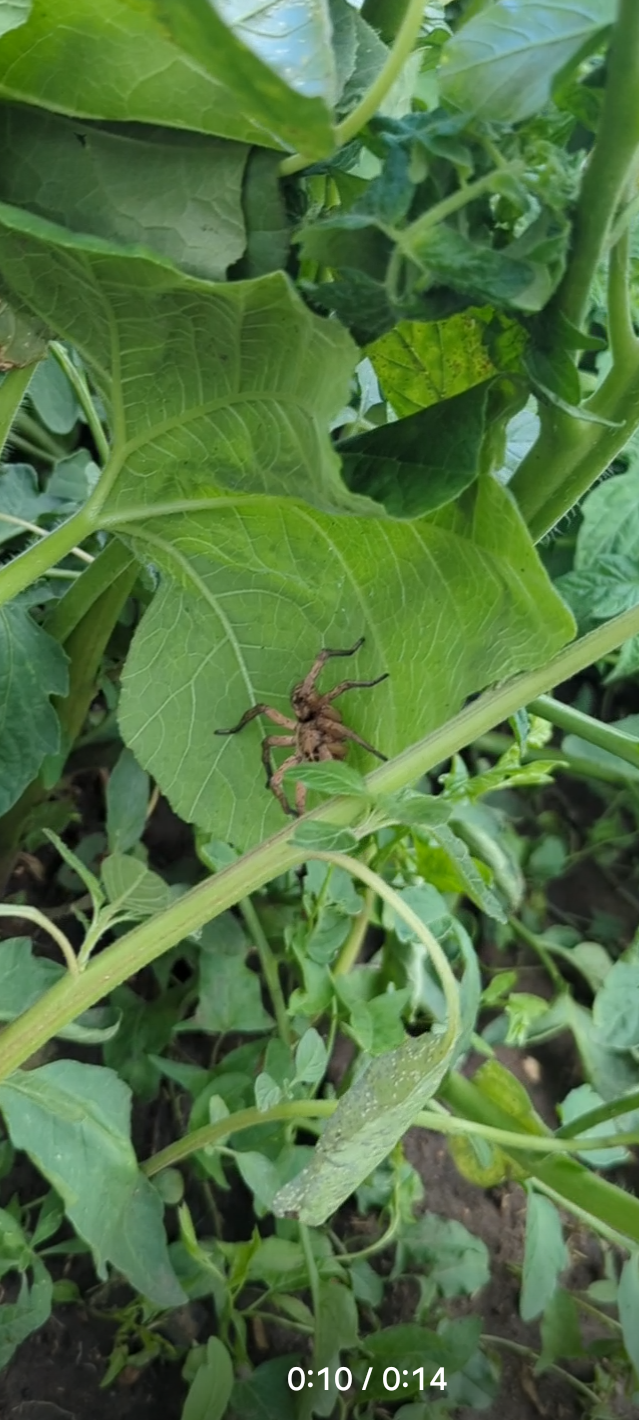
We have been keeping busy here at our house. Summer is here, but it’s been more rainy and stormy than anything. Which means the garden has taken off, both weeds and plants. I was out weeding yesterday and almost put my hand right where a giant Wolf Spider was hanging out. I HATE spiders. The worst part is that I walked away for a minute, and when I came back, the spider had disappeared. So, now I have a ton more weeding to get done and I know there is a giant spider out there somewhere, but no idea where.
So, needless to say, I really don’t want to go out and get the weeding done. I also desperately need to trim my tomato plants. They have gone completely wild, and I can’t see where anything is. I did get four of them trimmed up the other day, but it took an hour and a half. So, tons more work to do in the garden.
Livestock
This year, our goal was to put a little bit more home-raised meat in the freezer. We hatched out our own chicks for the first time, so we could process a few of the extras and the roosters. I call them our teenage chickens, and unfortunately, we have lost a few. The teenagers are small enough to get out of the chicken pen (I am working on fixing this), and they hang out in the goat pen with the boys instead. Which I didn’t think was a big deal. They are still behind fencing, they sleep in an extra dog igloo, and I thought everything was fine. Until one day, I counted up the teenage chickens, and we were down a few. A week later, we are down a few more. We have been here for a little over a year and have never had a predator problem. However, there is apparently a fox in the area, down further away from us, but I wonder if it hasn’t made its way up to our property. I still don’t see how, again, they are in fencing and with male goats, I wouldn’t think that would be something they were interested in messing with, but goats aren’t known for their protection abilities. There have been absolutely no signs of anything, no struggle, no feathers, just missing chickens. We do have large birds in the area, so it could maybe be that, but I don’t know. So, the chickens will be locked in the chicken pen as soon as I find where they get out, and hopefully, we don’t lose any more. We have a few extra roosters, so we will at least be able to put a few birds in the freezer.
Last year, we raised two broad-breasted turkeys, one for Thanksgiving, and one we made into ground turkey meat. This year, we wanted to have a bit more turkey meat and brought home five white broad-breasted turkeys. They were the absolute cutest things ever as chicks, but now I am ready for processing day. The adult turkeys STINK. Like all meat turkeys, they eat a ton of food, act like they are always starving, but I don’t remember last year’s smelling this bad. It makes sense, I guess, they eat to grow, so they poop a lot, like a giant chicken, and it’s just gross. Wherever the roost is completely covered and I am ready for them to go bye-bye. Next year, if we raise turkeys again, they will need to be off in their own spot, completely away from everything else. Our plan for the meat, if anyone is curious, is to keep one for Thanksgiving, halve two of them so we can roast a half a turkey instead of a whole chicken, and then grind the other ones into ground meat. I also have a wild turkey in the freezer that we will add in there somewhere.
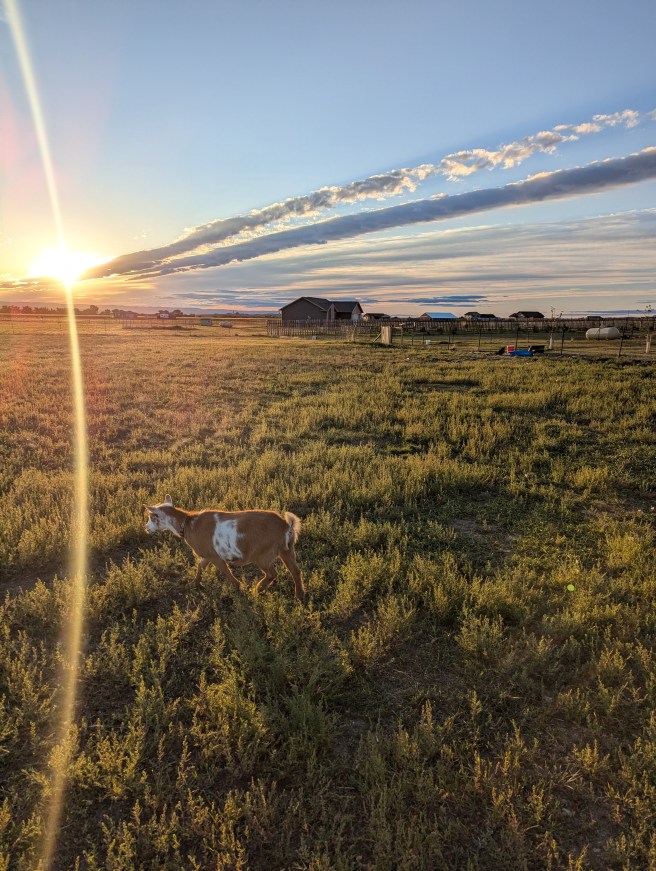
Our goats have been a bit of a disaster this year. We had our first kidding season and ended up with three beautiful little does. However, we did lose one mama to complications. This made my milk plans sort of go out the door. Our one Nigerian Dwarf that survived only had one kid, and therefore didn’t produce as much milk. It was her first time, and when I put her on the milking stand, she hated it. No matter what I tried, she never really got any better, so I just let her raise her baby and didn’t bother milking her anymore. That left us with our Alpine as the only milker. She is the best goat. She gives us tons of milk, she is easy on the stand, and we love her dearly. However, her milk, no matter what I do, is always goaty. It’s ok if you drink it fresh that day, but if it sits at all it gets a goat flavor to it. So, as much as we love her, having her in milk isn’t all that helpful. I am currently in the process of drying her off and hoping our next round of kidding goes better for milk production.
We did end up putting a little goat meat in the freezer for the first time. We had a wether that ended up being a bit of a nuisance. I have written about him before, he wasn’t fully castrated and still had one testicle. This complicated all of our breeding because I couldn’t put the does in with the buck without having to move them all around to avoid possible breeding by the wrong boy. He was also very loud. Just outside bleating all day for no reason. We are a small property, only three acres, with neighbors on similar three acres, and so we try and be courteous to them with the noise. We processed and put him in the freezer. We have only tried goat meat once, we roasted a leg, and I have to admit it was pretty tasty.
Whats Next?
For the rest of the summer, I will be tackling weeds. They are terrible out here. We are a very windy area, and the weed seeds blow around and take root on any exposed ground. It’s quite frustrating. However, the garden is producing, and soon I will have garden produce to process and put away. I love the feeling of stocking the house with things I grew and preserved.
In about a month, the turkeys will be processed, possibly a duck or two along with them, and we will have home-grown meat in the freezer again. My husband is going on an elk hunt this fall, if he is successful, we will have a ton of meat to put away from that. I also drew a doe tag this year and will hopefully be able to use that to bring even more meat home. I am toying around with the idea of bringing a few sheep onto the farm. I will need to downsize the goat herd first, just for more manageability, but we have a large pasture area that the goats aren’t using well, and I think sheep might be a better option for us as far as being able to raise them on grass and process. We will keep a few goats for milk, but I don’t need as many as I have. Lastly, we are getting ready to start our next homeschool year. My son will be starting his first year of high school, which has me a little stressed out. I struggled a little bit planning the year, because you kind of have to plan it all at the same time to make sure everything is covered. I think I have got it all mostly figured out, but now we have to follow through and track it all. I am excited about it, but also just really careful to make sure everything is covered and done correctly.
I can’t believe summer is sort of ending. Once the school year starts, summer goes by so quickly. Getting things up and running on the farm this year was a challenge, but I think I can see a light at the end of the tunnel. When the garden is harvested and put to bed, the meat is in the freezer, I truly think this year will be called a success. It just takes a while for everything to come together. Not too shabby for the second summer on the farm.
I think I have mentioned this before, but if you haven’t heard it, keep it in mind for future use. Currently, we have a broody hen who laid her eggs in a tote meant for a cat shelter. Yesterday she had three chicks hatch and there was still one egg with a pip in it.
This morning I got up and did chores as usual, and then took a minute to go check on this chicken and her chicks. What I found was a baby who looked like it had recently hatched, it wasn’t dry, and it wasn’t moving. I grabbed it out of the tote and it was cold to the touch, not making any noise, not breathing as far as I could tell, and the membrane was closed over its eyes. Quickly I took it into the garage and started trying to warm up in my hands. I huffed warm air on it and its eyes opened a little. It still wasn’t moving and very much almost dead, but there was a tiny spark of life.
I knew I needed to get it warm. I brought it into the house and got a rag which I ran under hot water. As soon as this hot rag touched the chick I felt it take a breath. It didn’t take long until it was cheeping and starting to move around. The warmth saved this chick. So, if you ever find a baby that looks dead, but it’s cold go ahead and try to warm it up. You never know when the warmth might be able to save it.
Items to Have on Hand
I have had to save a few animals now from cold. We had a pond when we first moved here and we had both a turkey and a chicken fall into the cold water and almost die last year. I had a chicken get caught in the rain and get too cold, and then of course this chick.
I always have a heat pad on hand. If I can’t find the heat pad or I need a bit more warmth I have a brooder plate. Today once I took the chick off the wet rag I put it on a towel on top of the heat pad. However, the heat pad takes a minute to warm up so I filled a mason jar with hot water and a lid and placed the baby next to it. I have also used a hair dryer on a low setting to help dry a chicken and get it warmed back up. Really anything can be used but I highly recommend some sort of heat pad to be readily available at all times.
Farm Life
I feel lucky that I found that chick just in time today. When you have farm animals you are going to lose some. It happens, but when you can save them it feels really good. Now, I just hope mama chicken does a better job and is able to keep him warm and safe. Remember, especially for baby animals, if they are cold you may still have a chance.
I am going to be honest with you, I tend to run a little on the pessimistic side. With our first kidding season on the farm coming up I just figured something would go wrong. I did not think it would go this wrong.
Back in late October and early November, we bred three of our goats. Two of our Nigerian Dwarfs and our one Alpine. The Alpine has kidded before, but it was a first for both the Nigerians. They were however almost two years old, so being too young was not a factor in this incident. I watched every video, talked to my vet friend, and did all the research. I felt like I was as prepared as you can be for your first kidding.
The First One
Our first goat to go into labor was Val. I had been watching her for days and the morning of her delivery she was very typical of a goat in labor. She was super loud, followed me everywhere, and you could just tell she was uncomfortable. It was a terribly windy day so I went ahead and put her in the kidding stall early and I sat with her all day. It was a very long day. Around 8pm she finally went into active labor. Again, typical of all the things I had read. She was up and down, pawing the ground, and started a few small pushes. Everything I read says once they are pushing it should not take more than 30 minutes before you go in and help. She took an hour. However, it was not super consistent in the beginning and she didn’t look in distress so I let her go. Once she started pushing hard, the baby was out in no time. For her delivery, she pushed and a water sack presented and then popped. She pushed some more and another water sack presented but this one had the baby in it. As soon as she had kidded another sack presented which ended up being the placenta. All very textbook and easy. I did feel her stomach after since she only had one baby and we were expecting more (she was huge), I thought I felt something but she passed the placenta, and all the research I had done said that was the end of labor, there were no more kids. In this case, they were right. She was done and her baby was HUGE! She safely delivered one good-sized doeling and has raised her for the last few weeks very successfully. She is a great mom!
Astrid
Tragedy, The Second Birth
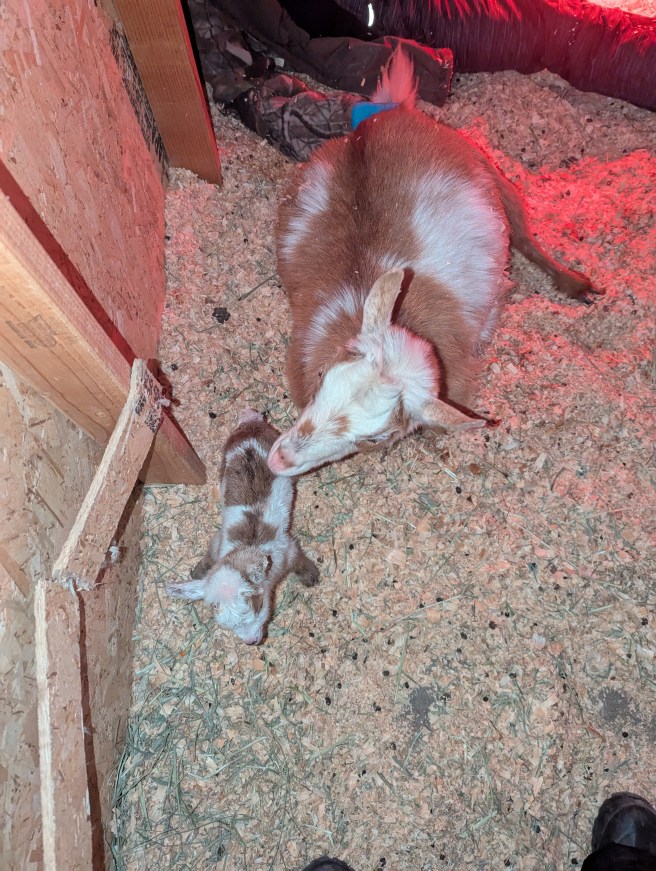
Two weeks after Val delivered, our second Nigerian (Glimmer) went into labor. This labor however was anything but typical. To start with she delivered on a Sunday, but the Thursday before I could have sworn she was in labor. She looked so uncomfortable all day, pawed the ground, and was restless and a little loud. I put her in the kidding stall but she never really made any progress. She never pushed, she never had any discharge, and the next morning she went about her business as usual. She was fine all day Saturday as well. She ate, drank, hung out with the other goats, and had no labor signs whatsoever. Sunday she went into labor for real. When it came time for active labor this is when things got a little weird. She pushed and one water sack presented and popped. Then she pushed and another water sack presented and popped. Finally, a third water sack presented and a baby was delivered. She was TINY. Like Val, shortly after the placenta came. However, it didn’t look like Val’s. It was small and it never fully delivered. Glimmer however seemed fine. She got up, nursed her baby, drank her molasses water, and ate some food. It was late at night and everything said the placenta could take up to 18 hours to deliver so I went to bed and checked on her in the morning. The placenta was still hanging and she looked a little down. She was laying down and not really wanting to get up, she ate but not much, and she wasn’t paying a lot of attention to the baby. I could still get her up and the placenta was fully out but was still attached by a tiny bit. She was doing ok, but over the next few hours I noticed her straining and pushing. So, I reached out to my friend, a vet, and she and her husband came over.
I will backtrack and say I sent her a video of the goat and she thought either retained placenta or more babies.
When she got to our house and examined Glimmer she found that she did indeed have more babies. Two that had passed already were stuck inside. My friend did everything she could to get the babies out but Glimmer was apparently narrow in the pelvic canal and the baby in the canal was breech. She couldn’t free her and on top of that she found a uterine tear. We decided at this point that she was suffering, there was no recovery, and she was put down.
Glimmer and Baby
Dealing with Death
I was ready for complications but this one shook me. I thought the worst I would have to deal with was maybe having to reposition a baby. Now, I feel so much guilt and I wonder what else I could have done. My vet friend said there was nothing I could have done to save her. The breech baby was stuck and even she couldn’t free it. I still wonder if I had done something Thursday if things would have been different. However, there were really no signs that she was in active labor or distress. If she was I don’t know how we got one live baby in the end. Or how we got one baby and a placenta past the other two. So, in the end, we lost our doe and gained her doeling. Her little one was named Ember, as in her mom’s last little ember, and she is the cutest thing you’ve ever seen. She is taking the bottle and doing just fine. I am still struggling with Glimmer’s death and how it happened. Everything I have ever read says if you have livestock you will have deadstock, but even so, it’s hard. It feels like I failed. I was supposed to keep her safe and I didn’t. That’s a tough pill to swallow
Baby Ember
The Last Delivery
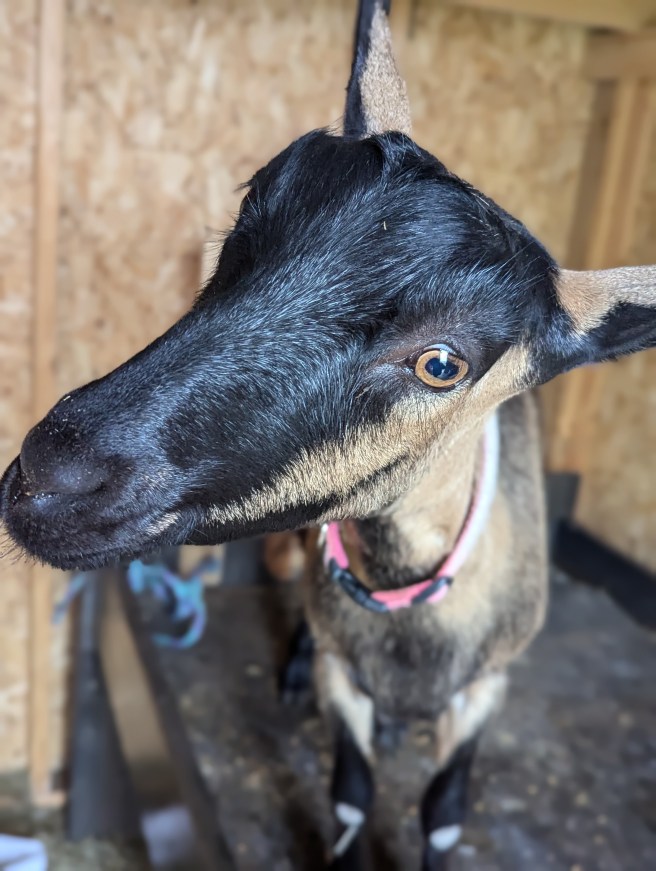
I mentioned earlier we bred three goats. Our Alpine is the last to go, and for awhile I thought she wasn’t pregnant. The Nigerians developed their udders a while ago. It was obvious they were pregnant, but the Alpine still doesn’t have one. For about the last month, I have made peace with the fact that her breeding didn’t take. She is the one goat I was really looking forward to, as she was bred to a Nigerian Buck and will have a mini Alpine baby, but I thought it wasn’t meant to be this go round. A few days after Glimmer passed, I was in the pasture and noticed Lee (Alpine) had a few pregnancy signs after all. She is a skinny goat so it was hard to tell. Now, it feels a little bit like a second chance. A light after the dark. She is definitely pregnant and due in about a week. I’m nervous, but she has kidded before and should be fine. I can’t wait to see what she has and I pray that it goes smoothly. This will be the end of our kidding season and I would really like for it to end in celebration. If she gives us a doeling I will be over the moon.
Lee
Baby Goats
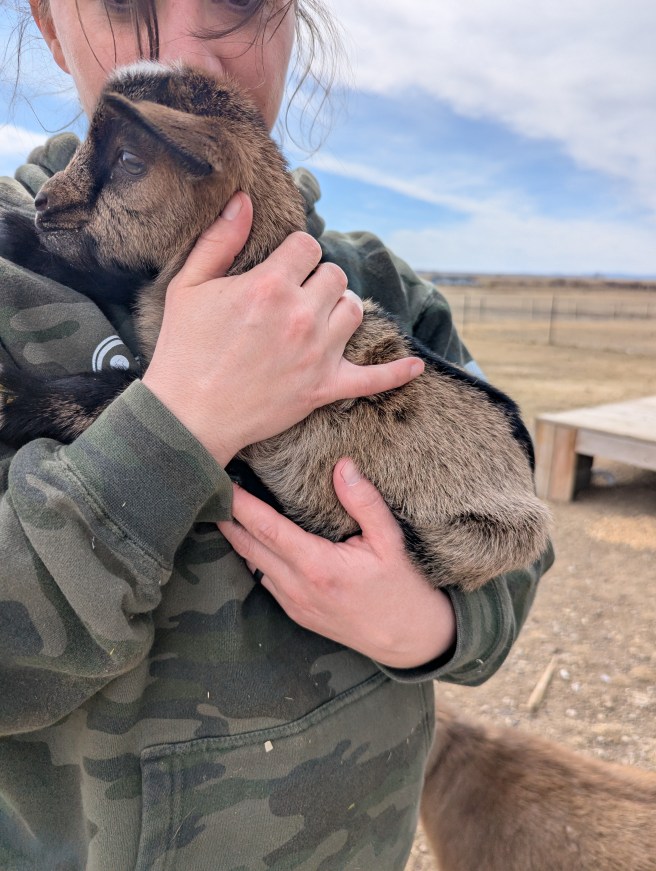
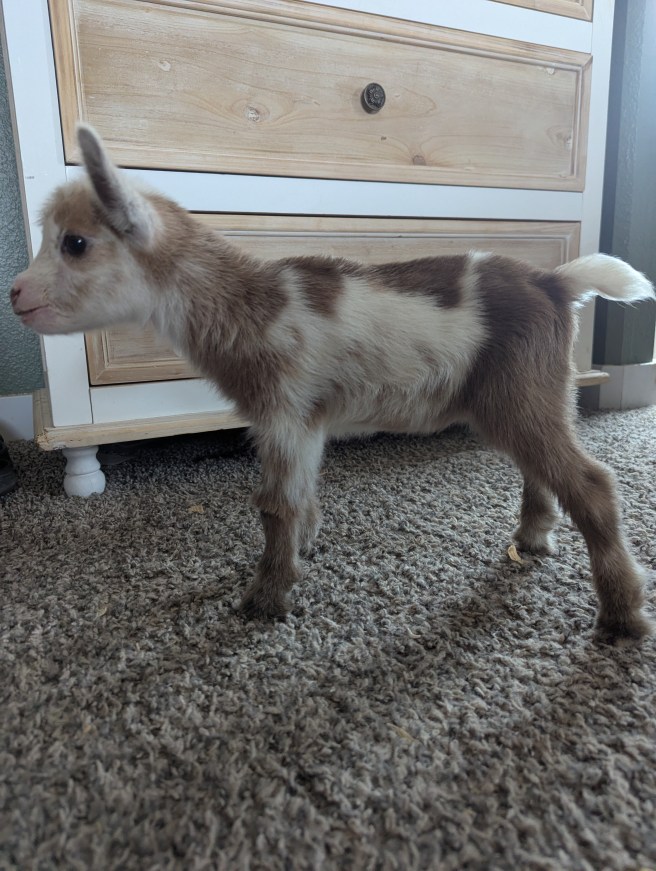
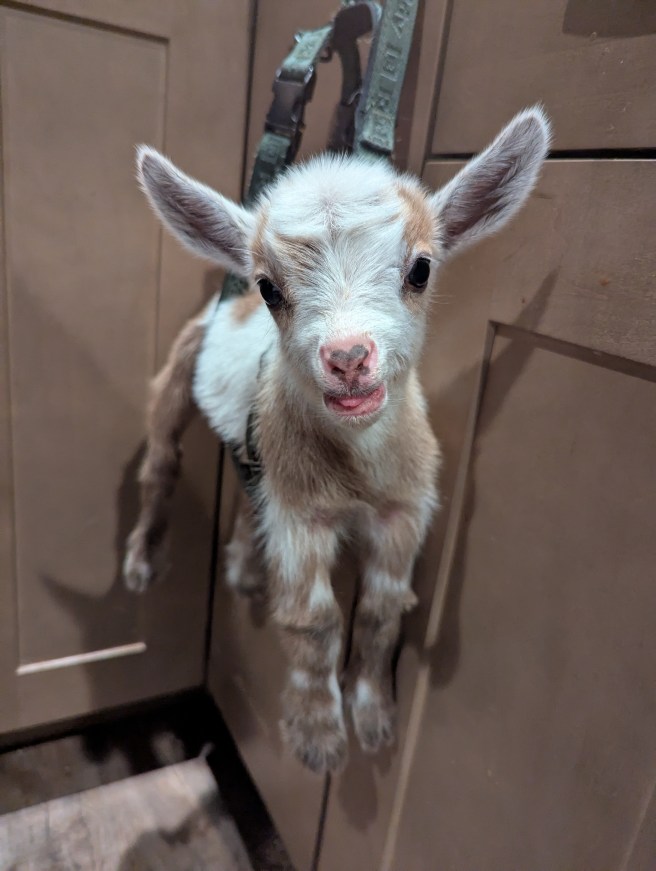
Little Ember is doing great. I however am a bit sleep-deprived. She is so tiny, so I make sure to get up every night at 2am and give her a bottle. She spends most of her day in the pasture with the big goats and sleeps with our other baby (Astrid) at night in the shed. They both love to run around the pasture and do the biggest little jumps you have ever seen. If nothing else, baby goats are super entertaining. It is a joy to watch them play together. It doesn’t fix everything but having them makes it a little better.
Ember
Final Thoughts
I keep replaying this in my mind and trying to learn from what went wrong. I asked online, Goat Forum, about the water sacks and everyone seemed to think it was normal, but i thought it was strange. As it turned out, it was multiple kids. I trusted a little too much in research and online help than what my gut told me. I still don’t think though even if I had gone in, the results would have been any different. If a vet can’t reposition the baby I doubt I could have. I also doubted myself when I thought I felt more babies since the placenta was passed. I think the take away is that I know my goats. I am with them every day and I should have trusted myself a little bit more. The end result would have still probably been the same, but I would have at least felt a little better about my part. I do still think I did what I could for the most part. I got a vet involved as soon as I thought it was needed and unfortunately it wasn’t enough. So, if you have goats and plan to breed them just be prepared. It can be one of the most amazing things you’ve ever done, watching a brand new baby be born is awesome, but it can also go wrong. As a livestock owner I try and do everything I can to take care of the animals I own, but things still go wrong. I will learn from this and use this knowledge from here on out. Let’s pray none of us ever face this again.
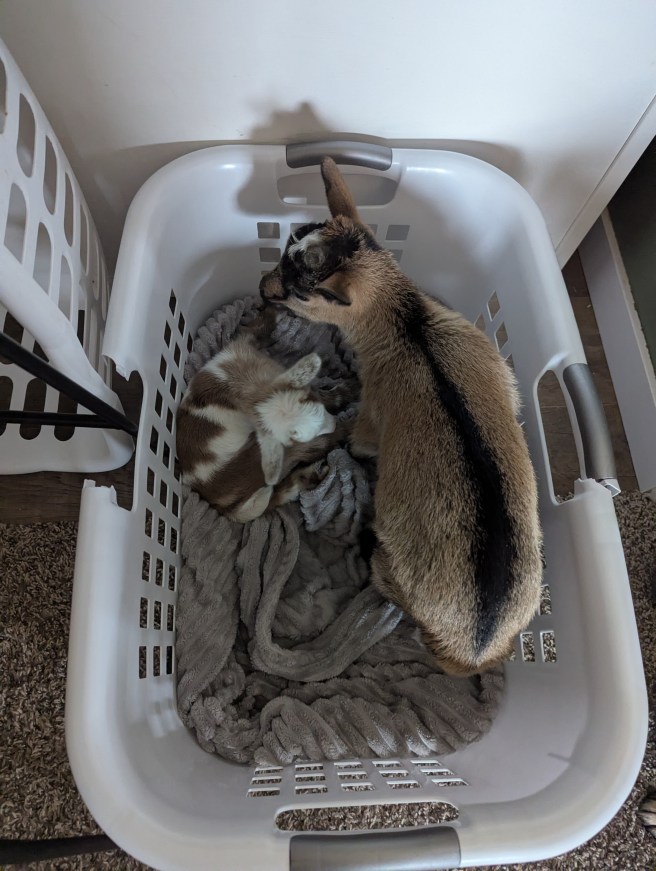
Two weeks apart. Look at the size difference
If you have any advice to share or kidding stories feel free to leave them in the comments. Maybe we can all learn and grow in knowledge together.
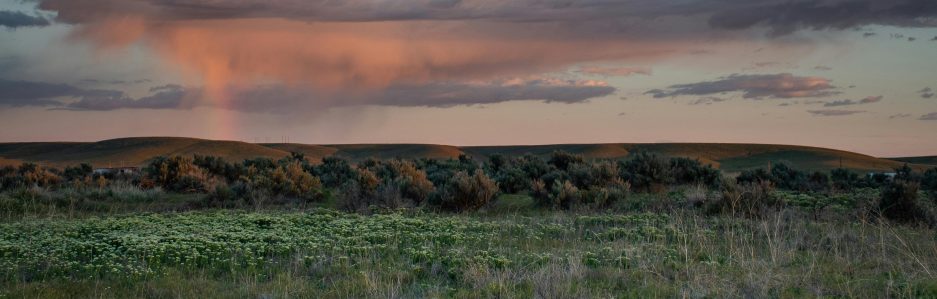
I don’t really quit but today has been a bit of a rough morning. We live in the prairies of South Dakota and the wind is brutal out here. This morning is no exception to that. It’s 29 degrees outside, which isn’t bad, but it’s 35mph winds. Add that to the fact that it rained just enough last night to make the ground icy and you have the recipe for an interesting morning.
First, I stepped outside not knowing the backyard was a skating rink and almost bit the dust. Next, I had to chase down the duck’s pond since it had been blown down the yard, fight the wind to get it back, and get it filled up with water only to look out the window an hour later and see that it was yet again halfway down the yard. I guess I am going to have to summon the courage to go back outside and put a rock in there to hold it down this time.
Then came the chickens. A few weeks ago, the chicken coop door froze and I couldn’t open it. The door slides in place and the wind had frozen it where it wouldn’t budge. Luckily, the coop has big side doors that open so I could let the chickens out, otherwise they would have been stuck inside. Today it was the bottom door. The chicken coop has what I like to call “the basement”. Basically what would be the underneath of the chicken coop has been closed off and the chickens can hang out underneath to get out of the weather. There is a door at the end that lifts up to open and you let it down the close it off. It doesn’t close all the way but enough to keep the chickens warm and out of the elements. This morning that door was frozen in place.
Lastly, were the lovely goats. I am still milking one doe, who I brought to the shed only to have her decide she didn’t want to go into the shed. She tried to run away, I grabbed her, she pulled and my feet flew out from underneath and I busted my butt. The goat feed I had in my scoop went flying, I said a few choice words, got up, and finished the job. However, while I was milking her I had a guest join us in the milking shed. One of the bucks is small enough to squeeze through the gate crack and came into the shed looking for food. He of course proceeded to jump onto the milk stand, while I was milking, and I had to stop milking and drag him off. So, now I need to finish milking but I smell like a stinky buck. Eventually, I got everything done but the chores that usually take about 20-30mins took an hour.
So, although I will not be selling the farm, mornings like this one make me question why we live where we do. The wind just sort of grates at your nerves over time, and although you get used to it a little I don’t know that you can ever simply get used to wind this strong all the time. I am really dreading February when it gets into the negatives here and the wind-chill is unbearable. I think I may dry off the last goat before that happens. We have babies due in March, so it will be a nice break for everyone. I don’t want to complain too much, I am so thankful that we were able to get this property and I have all the things I’ve been praying for for years, but this morning was a little but not so fun. Is it springtime yet?
Yesterday we processed our first real meat harvest of the homestead. A few months ago we bought three Broad Breasted Bronze Turkeys with the intent of using them as meat birds for our family. Two of them (both males) made it to harvest day. One of the males was massive! Twice the size of the other one and I have no idea why. They were the same age, same breed, same feed, but very different in size. After processing, the larger one ended up being a 26lb bird. We didn’t weigh the smaller one but I would guess about half that size so around 13lbs.
We are lucky enough to live close to my husband’s family and have Thanksgiving together every year. This year our smaller turkey will be gracing the table of the family dinner. With our big one, we went ahead and broke him down and turned the meat into ground turkey. From the 26lb carcass, we ended up with 13 lbs of ground turkey meat. I am currently in the process of making stock from the bones and will probably end up with around 3 gallons of broth total. The broth I am thrilled with, the meat however doesn’t seem like all that much when you think about how much time and feed cost went into that turkey.
Now, I really don’t want to sound like I’m complaining. I am very thankful to have homegrown meat in the freezer, however those turkeys ate a ton of food. I didn’t keep track of the numbers but it was a bit. I also know that homesteading isn’t usually a cheaper option. Most people homestead and raise their own meat for other benefits. We want to know how our animal was raised, exactly what it ate, and ultimately to give it a good life until the end. All of that was accomplished. Those turkeys had a grand time until they didn’t and it was quick and as painless as possible. It is also a skill I am thankful to have. I hope none of us ever truly need those skills, but I like knowing that we can. All in all, I still am unsure if the whole process is worth it.
Thanksgiving update……the Turkey was delicious. I am still on the fence though if this is something we will do again.
My mom came for a week-long visit this past week and it turned into a very interesting experience with the goats. One of the first days she got here we had a conversation about our two male goats. One of them is the goat who is meant to be our breeder, and one is our wether or castrated goat. However, the wether has been losing his mind over the ladies. He is at the fence every day trying to smell everyone and making all the weird goat noises, and ultimately acting more like a buck than our buck. Talking to my mom, I said “I don’t understand why he is acting this way”. So, she walks over takes a look at him, and asks “Are you sure he doesn’t have anything hanging there?” Yes, Mom, I’m sure. He was banded and things fell off and I’m positive he was wethered. So, we walked over, I picked him up, she felt his belly, and sure enough, he had one testicle left up in his belly. Nothing is hanging but he does have something up in the belly. YOU HAVE GOT TO BE KIDDING ME!
So, now we technically have two bucks. I am not really sure whether he can breed or not, but it is a possibility. Some research said that the testicle being up close to the body could make it too warm to have live sperm, but it isn’t totally out of the question. The bigger issue is the fact that he is acting absolutely insane. He has gotten stuck in the fencing at least six times. He puts his head through the fence squares and when he tries to pull out, his little horn scur gets caught.
I got these goats from a breeder who does show goats. Her mom has been in the goat industry for something like 30 years, and they all do shows. Thinking that this would give me a better quality goat and fewer issues over the long run. So far, they are overall good goats, but almost all of them have horn scurs and our wether has a testicle. All of these are somewhat common issues, but still a little frustrating. Horn scurs are where their horn bud is burned so a horn doesn’t grow, but some cells survive and a tiny piece of horn grows. These can be an issue because they aren’t as sturdy as a normal horn and they can rip them off and bleed. Which is exactly what this wether did. He keeps sticking his head in the fence and getting stuck due to his scur. We had to keep going out there and picking him up and trying to get him unstuck, which was quite a challenge. Eventually, somehow the scur fell off. So now, he does still get himself stuck but it’s much easier to pull his head out.
Future plans involve getting some smaller fencing and doubling up so he can’t fit his head through anymore. However, he should at some point be too big to put his head in the square. We also have to make a decision on what to do with him. His entire purpose on this farm was supposed to be keeping the buck company. Goats don’t like to be alone so we purchased him to keep the buck company. He was never supposed to be a breeder, I’m not sure that he can, but I don’t really want to take the chance. It wouldn’t be the end of the world. He did come from two nice parents, both registered, but our buck was chosen over him so I would like to use the buck we actually picked. Our options seem to be, to keep him and do nothing, get him surgery to remove the testicle, sell him, or process him. If we keep him and do nothing we have to keep dealing with him trying to get to the girls and acting insane. Our actual buck doesn’t act nearly as crazy as this one does, plus we don’t want him accidentally breeding anyone. If we get him surgery that is obviously going to be a bit of an expensive option. The cheaper option would be to get rid of him somehow and get a new wether for company. I assume surgery will be at least a couple of hundred dollars, and I can find a wether for under $50. Cost wise this would make sense. My concern with that option is that no one is going to buy a half-wethered buck. Boy goats are difficult to find homes for in general. Which, leaves us with our last option, to go ahead and process him. Before anyone gets too upset, this is a working farm. Every animal that we bring onto the property has a purpose. If they can’t fulfill that purpose they have to go. Sometimes, hard decisions have to be made. With all that said we have not made our decision yet. It will probably need to be made here soon, as winter is coming in and I would like to have it all settled before then.
In conclusion, if you ever have a goat or other animal that you need to band for castration, make sure you double-check that both testicles are in there. I did read that sometimes one can slip back up into place, so double-check. If you buy a wether from someone, double-check. You never know the shenanigans that might await you.
Sometimes the way a child looks at the world is exactly what you need. One of my big wants when I dreamed about moving onto property was an orchard. However, this first year we spent most of our efforts and budget on getting the animals set up and fencing done, therefore the orchard was put on hold for the season. The other day when I walked outside I noticed we had a ton of berries on a few plants around the property. I assumed they were not edible, but I Google lensed them anyway. To my surprise they were chokecherries. Turns out we have probably twenty chokecherry trees around the property. Right next to the original plant, we have a different tree that this spring I was told was a wild plum tree, but it turns out it’s a crabapple. I brought my daughter out to show her and she had the best reaction, “Mom, you have an orchard!” I could have cried at her words. Her sweet simple reaction reminded me to look around and be grateful for all I have. Yes, I want a large orchard someday, but how lucky are we to find these blessings already here and thriving?
We have already picked a five-gallon bucket of berries and I am working on preserving them in a few different ways as we speak. Chokecherries are described as having an astringent taste and not really for fresh eating, so I have cooked some down and made a syrup which I can turn into jelly or use as a base for anything that needs a good fruit juice. I have added syrup to hot tea and it’s delicious. I plan on making jelly in the future and I have a whole freeze dryer loaded up with the berries and a few bags in ziplocs in the freezer.
There will definitely be an orchard planted in the future, but for now I am thankful for my daughters perspective and my “mini orchard”.
We’ve got mice on our farm. With all the feed around it makes sense, and the fact that we live in the middle of the prairie adds to that. However, I don’t want mice in my milking shed getting into the feed and running amuck. One evening while I was milking two mice fell from the rafters of the shed. While funny, I don’t really want a repeat performance. I told my husband fairly quickly after moving that we were going to have to add at least one more animal, a barn cat. We have had a cat for years, but he’s been mostly an inside cat and has no interest in being a mouser, so another cat would need to be brought in.
One other thing you should know is that I have always wanted an orange cat. I don’t know why but big fat orange cats are my favorite. We’ve had a tiny little gray cat, and now a huge white and brown tabby cat, but I have never gotten my orange cat. Until now!
Sitting on the couch one evening I get a text message from a friend asking if we need a farm cat. I replied, “Actually, we do”. His outside cat had one kitten that survived and they needed to find it a good home. Without knowing anything about the kitten I told him we would take it. He sent me a picture later on, and to my surprise, it was a tiny little orange kitten.
This little one ended up being a male and since he had been outside with his mom he was very skittish. They brought him to us and it took a few days but eventually, he warmed up to being handled and is now the sweetest little cat ever. He’s still a kitten and wants to chew your fingers all day, but when he’s tired he cuddles right up next to someone and sits there purring away. He’s sitting curled up in my lap as I type this post. His name is officially Arnold, after Arnold Schwarzenegger, since we need him to live up to the Predator and Terminator namesake, but we call him “sticky kitty.” My daughter came up with this, when you pick up a kitten and they use their claws to hold on, she called that sticky paws. Sticky paws turned into sticky kitty and we said it so much that it stuck and now his name is Sticky. Kind of silly but so cute.
Sticky Kitty has been earning his keep! Back to our mouse problem. Sticky has taken out three mice in the two weeks that we have had him. The first one I stunned and he finished off, the rest he has taken care of all by himself. If we are in the shed and hear or see anything someone runs to grab the kitten. I assume it’s because he was raised by his outside cat mother, but he is a professional mouse hunter. It’s disgusting but he even eats the whole thing after he has caught it. Sticky is still a little too young for us to feel comfortable leaving him outside all day, so he catches his mouse and then we bring him back in. He does get to stay outside and play for a while during the day sometimes, but we will keep bringing him for a bit to make sure he is used to us and won’t just run away. Plus, he’s adorable and we love having him running around.
It still amazes me how things work out. I think God gives us little reminders or gifts sometimes. I have always wanted an orange cat, and through a random chance, I ended up with one. Now I guess we wait and see how much of the orange cat personality he ends up with. Whatever happens, at least we know our mouse problem is no longer an issue!
This summer we have been eaten alive by mosquitoes, we have grasshoppers everywhere, and there are spiders and beetles galore. The bugs on this property are out of control. It makes sense, our property is in the middle of the prairie and we are surrounded by farmland, but that doesn’t mean I have to like it. I know there are chemical answers out there, but I don’t like the idea of covering our land in insecticides. So, I began searching for natural answers.
First, was our mosquito problem. I have never lived somewhere where we had mosquitoes like this. We do have a small fish pond but that is our only standing water and I still cannot figure out where they are coming from. I swear they live in the grass and they are making outside time miserable. We built a new goat shelter and my husband’s legs got eaten to pieces. I can’t go into my garden to take care of it without having six mosquitoes on each leg every time I turn around. I don’t love being covered in bug spray but at that point, it was our only option. So, a Google search ensued.
Most birds, including chickens, will eat mosquitoes and other pests however, they are not particularly good at it. Bats are great mosquito hunters, but as I mentioned we live on the prairie so that didn’t seem like a good answer. Ducks are better foragers and bug catchers than chickens in general, but not all ducks are as good as others. From my research, it seems that the Muscovy duck is the best duck for pest control. In fact, I believe they were called mosquito assassins and will eat mosquitoes out of the air. This was absolutely perfect for me because Muscovy ducks have been a dream animal of mine for many years. I know a lot of people think they are ugly but I love them. The fact that they gobble bugs is a giant bonus.
Bringing ducklings home
I started to look around online hoping to find adult Moscovy ducks. I did, but all the adults were a minimum of four hours away and I won’t drive that to pick up birds. So instead, I found a local woman who had four Muscovy ducklings. They won’t be gobbling bugs right away but I don’t think it will be too long before they do. If you want Muscovy ducks, I recommend starting with your local Facebook pages. Here, we have a statewide poultry exchange page that is pretty helpful when looking for poultry of any kind.
Before I continue this story let me add that we currently have three baby turkeys about 3-4 weeks old, and a gosling also the same age. They were sharing a brooder and I thought they would be too big to put the babies in with.
We picked the babies up, brought them home, and put them in their own brooder. Later that day we took them out for a little outside time and decided to also bring out the gosling to see what it would do. This gosling, we are now pretty sure is an African Goose, but still do not know the sex. As soon as the gosling saw these babies it went straight over to them, checked them out, and plopped down right next to them. They also ran right over to the gosling cuddled up and wouldn’t leave it. It was the cutest thing and not how I thought that would go at all. So, now our 3-4 week gosling is basically a mother duck. They are in the brooder together and it hovers over them like an anxious momma. Every time we go out to check on them they are all snuggled up together. This gosling was originally purchased as a chicken guardian, but I guess it is now the duck guard.
Muscovy Benefits
Muscovy ducks are not like most ducks, in fact, they are more goose-like than duck. They grow to be large birds that are capable of protecting themselves fairly well. They make good mothers who raise very large clutches of ducklings. This is also why they can become an invasive species, as they reproduce rapidly. If you have a homestead or a farm, Muscovy is said to taste more like steak than duck, and since they are such large birds make great meat options. They also do not quack like a typical duck but make more soft honks or hissing noises. Their water needs are less than your average duck. They do still need water, but they do not hang out in it all day like a mallard duck would. For all these reasons. plus the fact that they forage and eat insects, we decided to bring home Muscovy ducks to our little farm. Hopefully, the next update about the ducks will be a long post on how amazing they are at bug control.
Other options
We have obviously decided to bring Muscovy ducks to our property as I think they are going to be the best option for pest control, but what if you don’t want ducks? Once again, chickens do an ok job at pest control. I have seen ours chase grasshoppers around the yard and eat them, but I read they really only take care of mosquito larvae in water and not mosquitos in the air. The other poultry we have are the Turkey poults. We have recently found out that turkeys LOVE grasshoppers. Right now they are only able to catch and eat the smaller ones, but once they get big the grasshoppers are going to be in trouble. They are even better than the chickens at catching grasshoppers, but I am unsure of their skills with the mosquitoes or the beetles. One of them did eat a spider which for us is extremely helpful. Out on the prairie, we have wolf spiders living in the ground all over and I hate spiders. Wild birds will take care of some bugs for you, but for what we have they do not do enough. Another option would be something like Diatomaceous Earth. It will kill quite a few different varieties of bugs, but it can also take out your good bugs so I would be selective on where I put it. We did put that down first before the ducks came home as the mosquitoes were not bearable. I am very hopeful that when all the birds are big enough to roam around we will not have to use it again. Maybe between the combo of poultry and DE we can survive this summer without losing our minds over the bugs.



 Wattles and Combs Farm