Keeping Busy

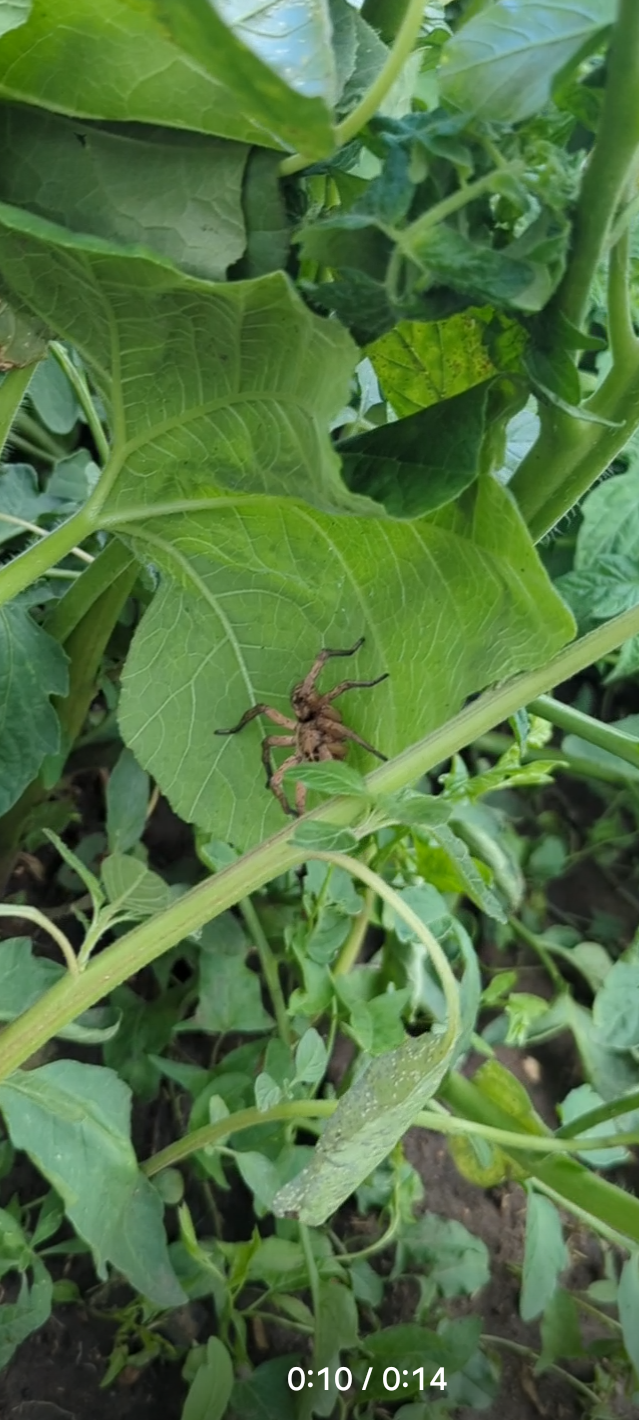
We have been keeping busy here at our house. Summer is here, but it’s been more rainy and stormy than anything. Which means the garden has taken off, both weeds and plants. I was out weeding yesterday and almost put my hand right where a giant Wolf Spider was hanging out. I HATE spiders. The worst part is that I walked away for a minute, and when I came back, the spider had disappeared. So, now I have a ton more weeding to get done and I know there is a giant spider out there somewhere, but no idea where.
So, needless to say, I really don’t want to go out and get the weeding done. I also desperately need to trim my tomato plants. They have gone completely wild, and I can’t see where anything is. I did get four of them trimmed up the other day, but it took an hour and a half. So, tons more work to do in the garden.

Livestock

This year, our goal was to put a little bit more home-raised meat in the freezer. We hatched out our own chicks for the first time, so we could process a few of the extras and the roosters. I call them our teenage chickens, and unfortunately, we have lost a few. The teenagers are small enough to get out of the chicken pen (I am working on fixing this), and they hang out in the goat pen with the boys instead. Which I didn’t think was a big deal. They are still behind fencing, they sleep in an extra dog igloo, and I thought everything was fine. Until one day, I counted up the teenage chickens, and we were down a few. A week later, we are down a few more. We have been here for a little over a year and have never had a predator problem. However, there is apparently a fox in the area, down further away from us, but I wonder if it hasn’t made its way up to our property. I still don’t see how, again, they are in fencing and with male goats, I wouldn’t think that would be something they were interested in messing with, but goats aren’t known for their protection abilities. There have been absolutely no signs of anything, no struggle, no feathers, just missing chickens. We do have large birds in the area, so it could maybe be that, but I don’t know. So, the chickens will be locked in the chicken pen as soon as I find where they get out, and hopefully, we don’t lose any more. We have a few extra roosters, so we will at least be able to put a few birds in the freezer.

Last year, we raised two broad-breasted turkeys, one for Thanksgiving, and one we made into ground turkey meat. This year, we wanted to have a bit more turkey meat and brought home five white broad-breasted turkeys. They were the absolute cutest things ever as chicks, but now I am ready for processing day. The adult turkeys STINK. Like all meat turkeys, they eat a ton of food, act like they are always starving, but I don’t remember last year’s smelling this bad. It makes sense, I guess, they eat to grow, so they poop a lot, like a giant chicken, and it’s just gross. Wherever the roost is completely covered and I am ready for them to go bye-bye. Next year, if we raise turkeys again, they will need to be off in their own spot, completely away from everything else. Our plan for the meat, if anyone is curious, is to keep one for Thanksgiving, halve two of them so we can roast a half a turkey instead of a whole chicken, and then grind the other ones into ground meat. I also have a wild turkey in the freezer that we will add in there somewhere.

Our goats have been a bit of a disaster this year. We had our first kidding season and ended up with three beautiful little does. However, we did lose one mama to complications. This made my milk plans sort of go out the door. Our one Nigerian Dwarf that survived only had one kid, and therefore didn’t produce as much milk. It was her first time, and when I put her on the milking stand, she hated it. No matter what I tried, she never really got any better, so I just let her raise her baby and didn’t bother milking her anymore. That left us with our Alpine as the only milker. She is the best goat. She gives us tons of milk, she is easy on the stand, and we love her dearly. However, her milk, no matter what I do, is always goaty. It’s ok if you drink it fresh that day, but if it sits at all it gets a goat flavor to it. So, as much as we love her, having her in milk isn’t all that helpful. I am currently in the process of drying her off and hoping our next round of kidding goes better for milk production.

We did end up putting a little goat meat in the freezer for the first time. We had a wether that ended up being a bit of a nuisance. I have written about him before, he wasn’t fully castrated and still had one testicle. This complicated all of our breeding because I couldn’t put the does in with the buck without having to move them all around to avoid possible breeding by the wrong boy. He was also very loud. Just outside bleating all day for no reason. We are a small property, only three acres, with neighbors on similar three acres, and so we try and be courteous to them with the noise. We processed and put him in the freezer. We have only tried goat meat once, we roasted a leg, and I have to admit it was pretty tasty.

Whats Next?

For the rest of the summer, I will be tackling weeds. They are terrible out here. We are a very windy area, and the weed seeds blow around and take root on any exposed ground. It’s quite frustrating. However, the garden is producing, and soon I will have garden produce to process and put away. I love the feeling of stocking the house with things I grew and preserved.

In about a month, the turkeys will be processed, possibly a duck or two along with them, and we will have home-grown meat in the freezer again. My husband is going on an elk hunt this fall, if he is successful, we will have a ton of meat to put away from that. I also drew a doe tag this year and will hopefully be able to use that to bring even more meat home. I am toying around with the idea of bringing a few sheep onto the farm. I will need to downsize the goat herd first, just for more manageability, but we have a large pasture area that the goats aren’t using well, and I think sheep might be a better option for us as far as being able to raise them on grass and process. We will keep a few goats for milk, but I don’t need as many as I have. Lastly, we are getting ready to start our next homeschool year. My son will be starting his first year of high school, which has me a little stressed out. I struggled a little bit planning the year, because you kind of have to plan it all at the same time to make sure everything is covered. I think I have got it all mostly figured out, but now we have to follow through and track it all. I am excited about it, but also just really careful to make sure everything is covered and done correctly.

I can’t believe summer is sort of ending. Once the school year starts, summer goes by so quickly. Getting things up and running on the farm this year was a challenge, but I think I can see a light at the end of the tunnel. When the garden is harvested and put to bed, the meat is in the freezer, I truly think this year will be called a success. It just takes a while for everything to come together. Not too shabby for the second summer on the farm.

Dairy Goats: Alpine vs Nigerian Dwarf

Beginner Herd

We added goats to our farm about two months ago. The first additions were a small starter herd of Nigerian Dwarf goats, which included two does already in milk, two yearling does not in milk, a month-old buckling, and a month-old wether. When we first brought them home we also brought home five gallons of frozen milk so we could try our own goat milk without worrying about feeding the bottle babies. Right away we fell in love with the fresh milk. Nigerian Dwarf milk is very creamy and not really goaty. There can sometimes be a slight aftertaste, but for the most part, it has no flavor at all. Once you have fresh milk it’s really hard to go back to anything else.

We Need Another

Out of our two milking Nigerians, we get almost exactly four cups of milk every milking. Four cups of milk per milking (twice daily) adds up to a half gallon of milk each day. Originally this was plenty of milk for our family. However, when you want to start making yogurt or other things with goat milk you end up needing a little bit more. My son alone drinks almost a quart a day. Then we ran out of frozen milk and had to start feeding our babies our fresh milk. Obviously, they need the milk and we gave it to them, but when you just got your own dairy goats it’s a bit frustrating to give every ounce back to the babies. Between the two babies, they drink a half gallon a day, so everything we got was theirs.

Originally I was looking into adding another Nigerian Dwarf to help solve this problem but she would only give us a quart of milk a day on her own. I really didn’t want to add multiple goats and have to milk four or five, twice a day. When I reached out to the lady we got our goats from she ended up not having another Nigerian anyway, but her mom had an Alpine. Her mom has been raising Alpines for about 30 years and has really nice stock. She asked if we would consider one since she would give us a lot more milk, and I agreed.

Butterfat and Volume

If you look into the different goat breeds you will find that Nigerian Dwarfs give the most butterfat in their milk. This is what makes their milk creamy. Alpines are on the lower end of the butterfat content, but they are a larger goat and therefore give a lot more volume. I think most people who want larger dairy goats tend to go with Nubians or LaManchas, but I was having a hard time finding quality goats, already in milk, within a reasonable distance from me. For those reasons, I went ahead and decided to purchase the Alpine and bring her home.

It took a few days for her to settle in, but now that she’s been here for almost a month we love her. She is one of the sweetest goats we have and she is so easy to handle. She is also giving us five cups of milk per milking, which is over a half gallon of milk a day. Currently, most of her milk is going to our bottle babies. This has been the big advantage of bringing her home. She produces enough milk on her own to feed both bottle babies and have some leftover. This allows us to keep all the Nigerian milk for drinking or for making yogurt and cheese. We have plenty of milk now! Between the three goats, we get a little over a gallon of milk a day. The bottle babies are coming up on three months old and will be weaned soonish. I’ve heard you wean them between two and three months old, but some also say to wait until they are eating solid food well. Ours are eating hay but I don’t think they are eating enough yet to be fully weaned. Once they are weaned we are going to be overflowing with goat milk.

Alpine Milk

As I mentioned Alpines have a lower butterfat content than Nigerians. On top of that Alpine milk does carry a bit of the goat flavor, and I am not sure why that is. I don’t know if it’s because they are larger goats, or if it has to do with the fat content, but it is definitely a goatier-flavored milk. It is still not bad and we don’t mind it but it is something to keep in mind when picking out a dairy goat.

Our Alpine is only a year old and on her first freshening. She is currently at around 10 cups of milk a day and I assume she will only give more as time goes on and she gets older and freshens again. When you research Alpine goat production it says they can produce 1-2 gallons a day. There was an Alpine at the place we got ours from that was the biggest goat I have ever seen. She was massive and her udder was huge. I would assume she’s closer to the two gallon a day mark. If you are looking for volume, I would think an Alpine would be a good consideration.

Another benefit that I have read is you can keep an Alpine in milk longer than you can a Nigerian. I have seen many posts saying you can keep an Alpine in milk for a few years even, while Nigerians tend to dry themselves off by ten months. So, if you don’t want to breed every year an Alpine might be what you need to look for. They do take up more room being a larger goat, but they are pretty easy to handle. At least our girl is easy to handle. She is also easier to keep fenced in. Yes, she requires more space, but she doesn’t try and squeeze under the fence like the Nigerians do. I have been surprised by how small a hole the Nigerians can manage to squeeze through. We have had quite a few escapes but the Alpine has never been the culprit.

Yogurt, Cheese, and More

There are many uses for goat milk. Basically any dairy product can be made from goat milk just like cow milk, with maybe a few adaptations.

  • Our first use for goat milk is fresh drinking. My son uses it in his cereal, we put it in our tea and coffee, and we drink it from the glass. It was an easy transition for our family to switch over completely. I was worried that they wouldn’t like it, but I think having the Nigerians first really helped with the transition to only goat milk.
  • My next favorite way to use the milk is homemade yogurt. I had never made yogurt before and it was much easier than I expected. I make it and strain it so that it is closer to a Greek yogurt and it’s fantastic. My husband has even brought some to a friend and he loved it. He has asked for more and downs it as soon as he gets it. You can make homemade yogurt with store-bought milk and if it’s anything like the yogurt we made I would highly recommend trying it.
  • The third would be a simple quick cheese. I’ve seen people call it a farmer’s cheese, or a Chevre cheese. You need an acid, (vinegar or lemon juice) and milk. It’s a pretty quick and easy process. You end up with a cheese similar in consistency to a feta. You can flavor it however you want and it’s great to add to salads or even eggs for breakfast. I would like to try and make more of a mozzarella cheese, I think this would be a bigger hit with the whole family, as the kids don’t care too much for the simple cheese.
  • Lastly, I made Cajeta. It’s a Mexican caramel typically made from goat milk. It was so good, but very very sweet. It also has a cinnamon stick added to the boiling process and I don’t know if I would add that next time. My daughter did say it reminded her of Christmas and I have to agree, there was something about it that was very much reminiscent of Christmas-time flavors. If I make it again I will not cook it as long. It turned out pretty thick and while great, was a little hard to use. I think I would like a more pourable consistency to put on ice cream.

So far I have not been able to make butter or even just heavy cream. Goat milk is naturally homogenized, meaning the fat doesn’t separate the same way cow’s milk does. From what I have read it will separate if you let it sit long enough, but the flavor of the milk will also change if it sits so I haven’t tried. For goat’s milk, it is most recommended that you buy a milk separator. I would love to have one someday, but they can be pricey so we will have to wait a little while to work that into the budget. Once we add that to our gadgets I hope to make butter, ice cream, sour cream, and heavy cream. For now, most of our excess milk is being made into yogurt.

How to Handle Goat Milk

The goaty flavor is what we are all trying to avoid in our milk. While a little goaty flavor can’t be helped sometimes the way you handle fresh milk can really make a difference. First and foremost everything has to be clean. From what you are milking into, to the goat itself, it’s very important that you make sure everything is really clean. You should avoid plastic whenever you can as it can hold onto flavors and leech those into your milk. I like to use stainless steel or we have a big glass batter bowl that I milk into, and then I store all our milk in glass half gallon or quart size mason jars. Next, you want to strain and get your milk cold as quickly as possible. The faster you get it cold, the longer the milk will keep fresh. I like to bring my milk in as soon as I’m done milking, strain it, and then I stick it in the freezer for about an hour or so. Be careful because I often forget the milk in the freezer and end up freezing it.

Milk will stay fresh in the fridge for a couple of days. After a few days the milk is still good, but the flavor will start to change. Fresh milk doesn’t go bad the same way store bought milk does, but the flavor changes quite a bit as it sits. I like to use our milk for fresh drinking within about two days, and then if I have any leftover I will turn that into yogurt. Everything is better when it’s made with fresh milk, but don’t be afraid to make yogurt or cheese with the older milk.

Finally, keep an eye on your goats and make sure they are healthy. You don’t want to use milk from a goat that is sick in any way. When our Alpine first got here she was stressed and had runny poop so we didn’t keep her milk. Once she settled in and returned to normal, her milk was fine to use.

If during milking the milk gets dirty for any reason consider tossing it. Straining the milk is essential because goat hairs and some dust will fall in the milk while you are milking, but anything else really shouldn’t be kept. It was pretty muddy here recently and somehow we kept getting dirt in the milk during milking. I gave that to the bottle babies or the chickens. If you drink your milk raw it’s best to err on the side of caution.

If drinking your milk raw scares you go ahead and pasteurize it. I may get a lot of grief for saying this but I think pasteurized milk is fine. There is a chance that heating the milk up might bring a bit of the goat flavor out, but sometimes it’s better safe than sorry. From what I have researched pasteurization doesn’t kill as much of the nutrients and benefits as we are led to believe. I personally think even pasteurized, your own fresh milk is better than anything you can buy. We all have to do what we are comfortable with and not what social media platforms are telling us.

For our family, I make sure to keep everything very clean, and we use our milk raw. However, if I think for any reason the milk has been contaminated we don’t drink it. If it’s not bad I will turn it into cheese or yogurt as you cook both of those, or it goes to the babies since they would drink straight from the udder anyway. Chickens will also help you dispose of your unwanted milk, or even yogurt that didn’t quite work out. So far, we have all drank our raw milk and been completely fine.

Who Wins? Alpine or ND

Both! That didn’t really answer anything, but we love all our girls. Each breed brings something the other doesn’t have and therefore I like having them both. Taste wise, the Nigerians win hands down, but the Alpine is still a good choice and you get so much more per goat. Maybe a mixed herd is the best option.

For future breeding plans I plan on trying out the mini Alpines. Mini goats are simply a large goat bred to a Nigerian Dwarf Buck. You don’t want to breed the other way around because it could cause issues for the doe to have a larger kid than she should but a smaller buck to a larger doe works just fine. I am curious to see if the Nigerian Buck brings any more fat content to the Alpine milk. A mini Alpine will still produce more milk than the Nigerian Dwarf, so I am really hoping it is the best of both breeds. I can’t find a ton of information on the internet about Mini Alpines so I guess we will wait and see. Our buck is still too young to breed and I am in no hurry. Once we find out I will let you all know. Until then research your goat breeds, make a choice, and jump. I do not regret our goats for one second. They have been such an awesome addition to our home and the fresh milk is everything I dreamed it would be.